
College Dating Apps Compared: Why Campus-Only Matching Changes the Equation
See how campus-only dating apps solve problems mass-market apps can't -- from verified student profiles to real dates, not endless chatting.
13 min read

Swipe left. Swipe right. Swipe until your thumb goes numb and your hope quietly follows. If that sounds familiar, you are not alone. Dating app burnout is hitting college students especially hard, and it is not hard to see why. Most apps were built for a completely different type of user.
Here is the thing: finding the best dating app when you are in college is not just about picking the most popular one. It is about finding one that actually works for your life. Your schedule is packed, your campus is your world, and you need to know the person on the other side of the screen is who they say they are.
In this post, we are going to break down why mass-market dating apps consistently miss the mark for college students, and what a campus-first approach does differently. We will cover everything from safety and verification to why one genuinely great match is worth more than a hundred so-so conversations. By the end, you will know exactly what to look for and why it matters.
Dating App Burnout Is Real (Especially If You're in College)
The dating app market is massive. We're talking $6 billion globally in 2025, with over 350 million active users worldwide. By every measure, dating apps have gone fully mainstream, with 30% of U.S. adults having tried one. And yet, satisfaction is dropping, especially among Gen Z. More users, more features, more burnout.
If you're a college student and swiping feels pointless, you're not imagining it.
Here's the thing most people miss: that frustration isn't a sign that dating apps don't work. It's a sign that the apps you're using weren't built for you. Mass-market dating apps were designed to maximize engagement and subscriptions for post-college adults. Their success metric is time spent in the app, not whether a sophomore found someone to grab coffee with between afternoon lectures.
Volume-first matching, endless swipe queues, premium filters you don't need, a user pool that mixes verified peers with complete strangers from across the city. None of that solves the actual problem college students have.
Whether you're figuring out the best dating apps in Ann Arbor or hunting for the best dating apps in Baton Rouge, the answer keeps circling back to the same issue: a general-purpose tool, no matter how many features it adds, will always feel like a bad fit for campus life.
The fix isn't deleting every dating app on your phone. It's understanding that the wrong tool for the job will always feel frustrating. Knowing that is actually a useful starting point.
What Mass-Market Dating Apps Were Actually Built For
So who were these apps actually built for? Not you, most likely.
The major dating platforms were designed around post-college adults living in cities, people with a 10-mile radius worth of strangers to sort through, time to browse, and disposable income to spend on premium upgrades. Their architecture reflects that: wide geographic matching, large anonymous user pools, and subscription tiers that reward continued engagement. If you're curious how that plays out in specific cities, the contrast between something like what are the best dating apps in Austin? versus a tight college town like what are the best dating apps in Ames? shows exactly how poorly that city-first model translates to campus life.
The metrics these platforms optimize for are also telling. Success, for a mass-market dating app, looks like time spent in the app, swipes per session, and message threads opened, not whether two people actually grabbed coffee. That distinction matters because every feature decision flows from it.
Premium filters, boost mechanics, read receipts: these features exist to solve the platform's retention problem, not your compatibility problem. They keep users paying, which keeps the business running. That's not cynical, it's just the product logic.
Here's the mismatch for college students specifically. A 26-year-old professional in Chicago needs a 10-mile radius because their potential matches are genuinely scattered across a city. A college sophomore's most compatible matches might live two buildings over. Wide-radius discovery doesn't help; it just adds noise.
And none of these platforms offer real campus-only verification. That means when you swipe, you're sorting through verified peers, off-campus strangers, and unverified accounts all mixed together, with no reliable way to tell the difference.
The Real Problems College Students Face When Dating
So mass-market apps weren't built for you. But what exactly are the problems they're missing? They run deeper than just feature gaps.
Academic pressure is the biggest one. Research confirms that academic demands create significant stress for college students, and 59% report relationship conflict caused directly by classes, studying, and work schedules. Spontaneous dating simply doesn't fit around a midterm week.
But here's the stat that really reframes things: 21% of college students who are already in relationships still report feeling lonely. That means the problem isn't just finding someone. It's finding the right someone. More matches don't fix loneliness. Compatible matches do, and that's a very different design challenge.
There's also a scheduling reality that general apps completely ignore. A student isn't free whenever an algorithm decides to surface a match. They're free on Tuesday afternoon between 2 and 4 PM, or maybe Sunday morning before the library gets crowded. Date plans need to fit an actual week, not just pop up whenever an app feels like it.
Proximity works differently on campus, too. A match 15 minutes away by car sounds close. But if you don't have a car and you have a 9 AM class the next morning, that distance is a real barrier, not a minor inconvenience.
And then there's verification. When you're meeting someone from a Verified. Private. Safe. campus-only pool, you know they're actually a student at your school. On a general app, you genuinely have no idea who downloaded it or why.
How Campus-Only Verification Changes the Safety Equation
That last point about verification feeling more urgent on campus leads directly here: the thing that makes campus verification powerful isn't just a feature checkbox. It changes the entire default.
On a general dating app, the starting assumption is unknown. You have no idea if someone actually attends your school, lives nearby, or is even who their profile says they are. Campus-only verification flips that default to confirmed. Every match is a real student at your school, full stop. That one shift removes a layer of uncertainty that mass-market apps structurally cannot replicate, because their user pools were never designed to be bounded that way.
There's also an accountability dimension that's easy to overlook. When you know you might run into your match at the dining hall or in your intro psych lecture, the social stakes are real. That proximity creates a natural incentive to be respectful and genuine in a way that anonymous city-wide swiping just doesn't.
For students who are navigating dating independently for the first time, that matters more than it might seem. Swiping through an unverified pool of strangers can feel genuinely uncomfortable, and research confirms that identity verification is recognized as a key mechanism for bridging the safety gap on dating platforms. A shared campus community, where everyone has skin in the game socially, makes the whole experience feel less like a leap of faith.
Ditto is built around exactly this logic. It only matches verified, private, and safe verified college students within the same campus, meaning verification isn't a premium upgrade or an optional setting. It's baked into every single match by design.
Proximity and Curation: Why One Great Match Beats a Hundred Mediocre Ones
Verification builds trust, but trust alone doesn't get you a date. That's where curation comes in.
Most dating apps hand you scale. Hundreds of profiles, endless filters, a swipe queue that never empties. The problem? More options doesn't mean better outcomes. It mostly just means more scrolling. We think connection deserves better.
Here's the counterintuitive part: 21% of college students who are already in relationships still report feeling lonely. That tells you something important. The issue was never a shortage of matches. It's compatibility, shared values, and connection that actually goes somewhere.
Curated matching flips the whole model. Instead of dumping a pile of profiles on you and wishing you luck, a campus-first approach runs the filtering work upfront and surfaces one match based on who you actually are, not just who's nearby. Quality over quantity, every time.
And "nearby" matters more than most apps account for. Campus proximity as a matching variable means date suggestions that are actually doable: the coffee shop you both pass between classes, a campus event happening this weekend, a dining hall window that fits two people's completely different schedules. Not a restaurant 20 minutes away that requires a car, a reservation, and a free evening.
That's exactly how Ditto is built. Every Wednesday at 7 PM, you get one curated match from your campus, plus a date plan with a specific time, place, and context already figured out. The logistics are handled before the conversation even starts, which removes the single biggest reason app matches never turn into real plans.
Endless Chatting vs. Actual Dates: Where Most Apps Lose the Plot
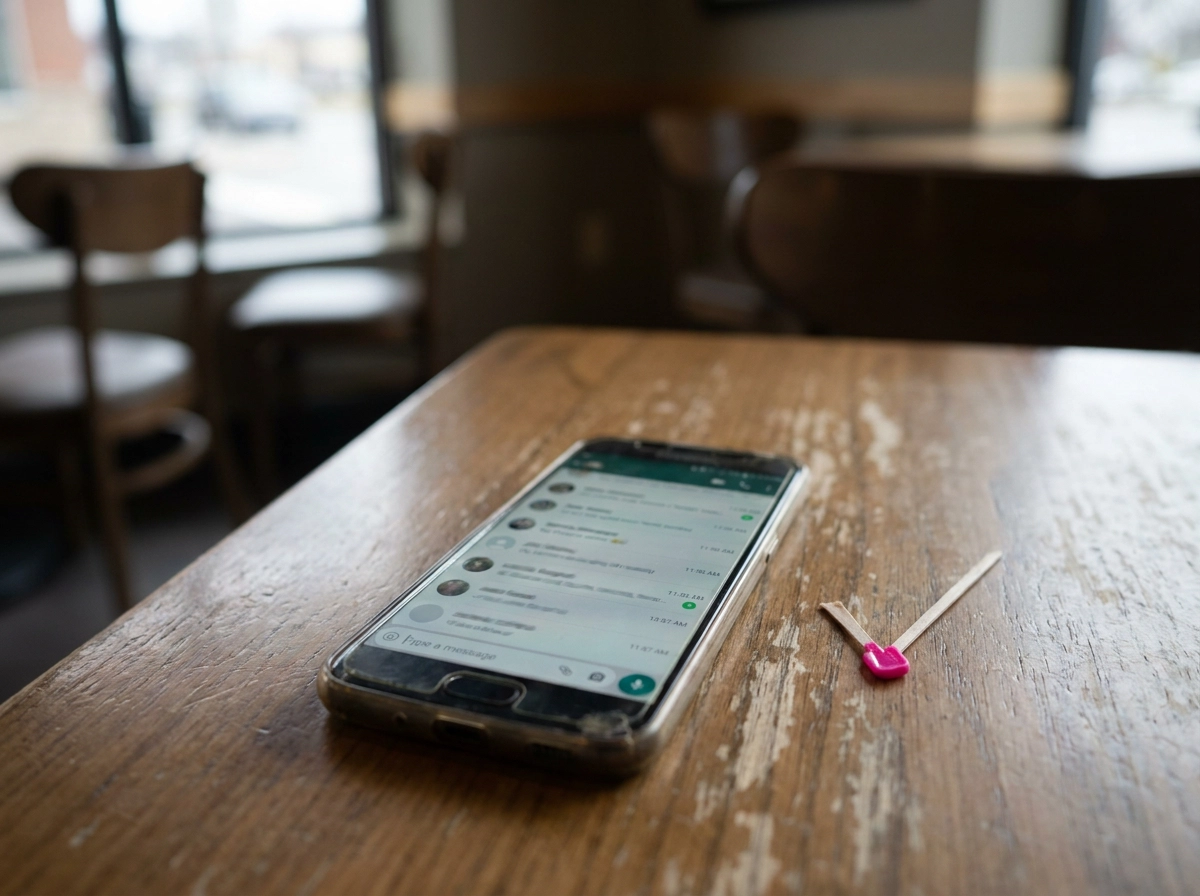
Even with a great match in your queue, most apps quietly work against you ever meeting that person in real life. The business model depends on keeping you in the app, which means more prompts to message, more notifications to respond to, more reasons to scroll. The result? Weeks of "haha same" conversations that go nowhere.
For college students, that gap between "matched" and "actually met up" is especially brutal. You're juggling class schedules, study blocks, club commitments, and a social calendar that changes every week. Converting a match into a date means figuring out who texts first, landing on a place that works, and finding a time slot that doesn't clash with anyone's midterms. Most matches don't survive that coordination tax.
A campus-first app that includes a date plan with every match skips all of that. The where and when are already sorted, so the first conversation has an actual destination. You're not trying to keep things warm for two weeks while calendars align; you're just deciding whether you're excited for Wednesday.
Real-world meetings also carry more weight in college than they do for adults in cities. Campus life is dense and overlapping. A date that goes well doesn't just end at the door; it sets up a hundred natural run-ins at dining halls, campus events, or the same study spot. That social fabric is built-in infrastructure that no city-based app can recreate.
Ditto's Wednesday 7 PM drop leans into that dynamic directly. Both people get the match at the same moment, with the same context and the same date plan already attached. Nobody's sending a cold opener into the void. The playing field is level from the first second, and the conversation can start where it actually matters.
What to Actually Look For in a Student Dating App
So you know the problem now. Here's how to shop for the actual solution.
Campus verification is non-negotiable. If a student dating app doesn't confirm that every match actually attends your school, it's just a general app wearing a college hoodie. Verified campus membership is the foundation; everything else builds on it.
Matching logic matters more than filter lists. Skip any app that leads with height, distance, or appearance sorting. College students share dining halls, libraries, and campus paths constantly, so proximity alone means nothing. What actually predicts a good connection is shared values and compatible personalities, and the matching logic should reflect that.
Check whether the app shortens the path to a real date or stretches it out. If the design rewards longer in-app conversations because that boosts engagement metrics, its incentives are working against yours. A campus dating app should hand you a match and a realistic plan, not a pen pal.
Look at whether the suggested dates fit college life. A recommendation built around a nice dinner across town, requiring a car and $60, was written for a 27-year-old professional. The best dating apps in Athens and other college towns know their users: no car, limited budget, and a 9 AM class tomorrow.
Finally, ask whether the app was purpose-built for students or adapted after the fact. Features like campus-only pools, curated matching, and schedule-aware date suggestions don't get bolted onto general apps because they don't scale to a broader audience. If those features are absent, you already have your answer.
The Right Dating App for College Is One Built for College

So you've run through the checklist. Now the real question: what do you actually do with it?
Here's the honest truth. Mass-market dating apps aren't broken; they're just built for someone else. A 28-year-old professional in Chicago, browsing a wide city radius on their lunch break, is exactly who those platforms were designed for. Using them in college isn't wrong, it just means you're constantly working against the grain of how they're designed to function.
The three things that genuinely move the needle for college dating, verified identity, campus proximity, and a built-in push toward real dates, aren't features that can be patched onto a general app. They're structural. An app built to maximize swipes and in-app messaging can't quietly retrofit itself into something that prioritizes getting two students to actually meet up on campus by Thursday.
If your current dating app feels exhausting, that's worth pausing on. It's probably not dating itself that's the problem. It's tool mismatch. Frustration is a pretty reliable signal that you're using something designed for a different person's life.
That's exactly the gap Ditto is built to fill. One curated match per week, verified college students only, delivered every Wednesday at 7 PM with a ready-made date plan already attached. No coordination friction, no endless message threads, no strangers who may or may not go to your school.
Quick gut-check before you download anything: does your current app verify campus enrollment, match within your campus, and actively push toward a real-world date? If it strikes out on all three, it was never built for you. Better options exist, and they were designed with your actual life in mind from day one.
Conclusion
College dating doesn't have to feel like a second job. The core lesson here is straightforward: general dating apps were built for a different user, with different needs, and forcing them to work for campus life creates unnecessary friction at every step.
The three things that actually matter are campus verification, proximity-based matching, and a real push toward in-person dates. Apps that nail all three don't just feel easier; they produce better outcomes because they were designed around your actual circumstances from the start.
Tool mismatch explains most of the frustration. The fix isn't quitting dating apps altogether; it's choosing one built for where you are right now.
If you're ready to stop swiping endlessly and start actually meeting people, give Ditto a try. One match. One Wednesday. One real plan. Sometimes simpler genuinely is better.