
Weeknight Dates That Fit a Student Timetable
Weeknight dates work best with a fixed start and end time. Here is how students plan date ideas at night around class and campus hours.
10 min read

Your Tuesday has a 90-minute gap between class and dinner. That is not a problem. It is a date. Most date night ideas assume you have a whole free Saturday and endless energy. As a student, your real challenge is timing: classes, commutes, campus hours, and that one group project that refuses to end. A date with a fixed start and end on a weeknight is easier to say yes to, and harder to cancel, than a vague all-day plan. The constraint is not a compromise. It is what makes the plan work.
In this post, we will cover why a defined window beats an open-ended Saturday. Then we will map your week, check campus hours and commute realities, pick a bounded window that fits your timetable, and choose a plan that fits inside it. We will also look at 5 to 6:30 PM, 7 to 8:30 PM, and 8:30 to 10 PM windows, how to set an end time without making it weird, how to send a weeknight invite, what to do when plans fall through, including cancellations, commuters, and consent, and how to build the weeknight habit.
Why a Defined Window Beats an Open-Ended Saturday
"We should hang out sometime Saturday" has no edges. It drifts, gets rescheduled twice, then quietly dies in the group chat.
A Tuesday date with a fixed start and end is a smaller ask. That's the whole point. It's easier to say yes to, and harder to cancel, because it barely costs either person an evening.
The constraint is the design, not a compromise on it. A 90 minute window gives the date a shape, a natural exit, and no awkward "so what now?" moment at the end.
Most date night ideas content treats planning as an idea problem: a long list you scroll until something looks good. For a student, the real bottleneck isn't ideas. It's time.
Here's the thesis for everything below: the window is the plan. Venue, food and activity are just details that fit inside it.
Step 1: Map Your Week Before You Map the Date
Before you map the date, map the week. Actual week only: lectures, labs, shifts, practice, club meetings, and the commute on either side of each block. Skip the fantasy version where you're ahead on readings.
Then hunt for gaps of two hours or more. As a rule of thumb, a 90 minute date needs buffer at both ends, so a 90 minute gap isn't actually a 90 minute opening.
Note your energy curve. An 8 AM lecture or a closing shift rules out a 9 PM date even when the calendar looks empty. It's the same reason students juggling 8 AM classes need a plan that matches their real week.
Pick two default weeknights and reuse them. A repeatable slot stops being a weekly negotiation. If you're on a matchmaking service, Ditto sends one curated campus match every Wednesday at 7 PM with a date plan attached, itself a weeknight slot. Treat that rhythm as a starting point and shift the window to suit your timetable.
Step 2: Check Campus Hours and Commute Realities
Your week is mapped. Now check what's open inside those gaps. Dining halls, the library, the rec centre, coffee shops and campus event spaces all have closing times, and those hours shape your window more than anything else. Universities publish altered-hours notices constantly, so treat the schedule as a live document (Spring Break 2026 campus operations). Then confirm payment: meal swipe, dining dollars or cash, plus whether a weeknight reservation is needed. A plan requiring a budget chat gets postponed.
Commuters: let your transit schedule set the end time, Step 5 covers how to say that without making it awkward. Factor in travel time on both ends, a venue that requires a long commute shrinks the date before it starts. Scan campus calendars and event boards for what's free on a Tuesday. Ten minutes of checking beats a locked building.
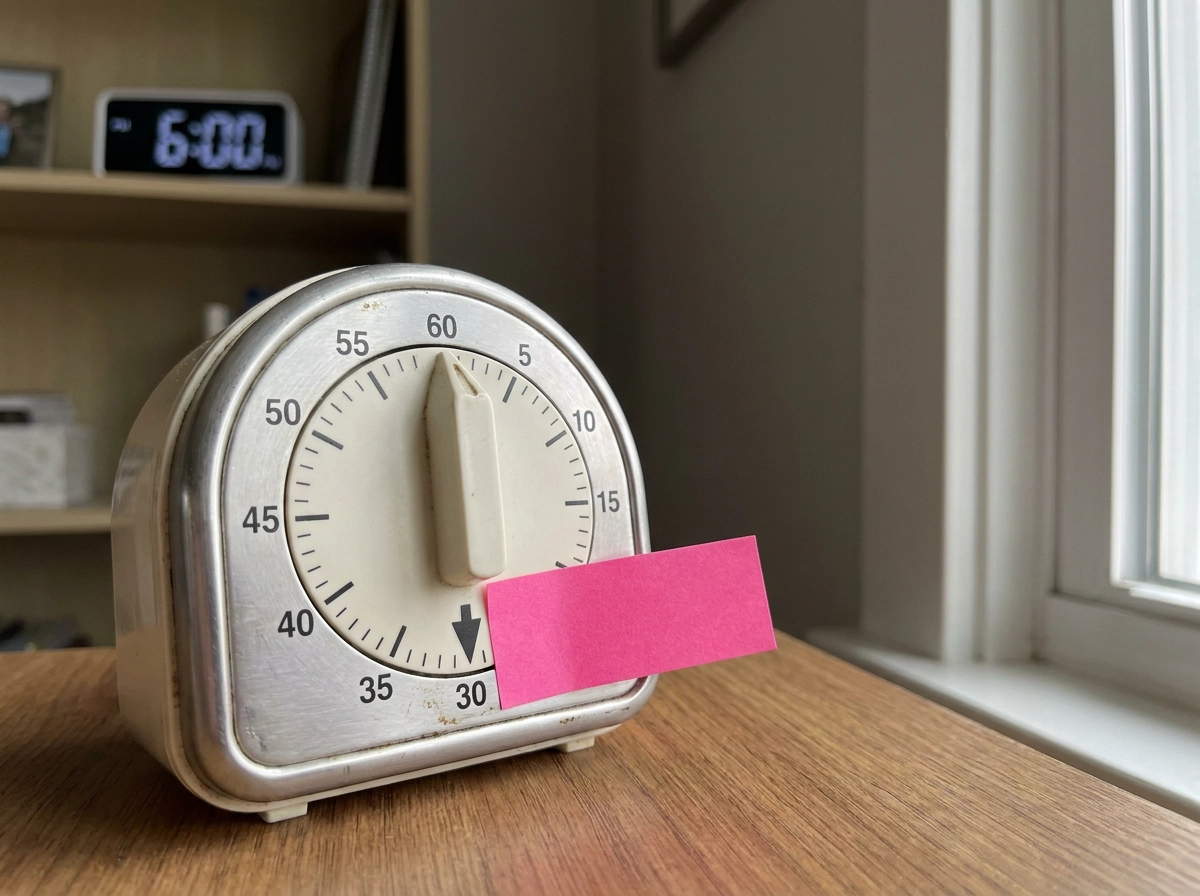
Step 3: Pick a Bounded Window That Fits Your Timetable
Once you know what's open and how far it is, lock the clock.
Those three windows are covered in the sections below, for now, pick whichever fits your mapped week and lock it.
Then pick one window per weeknight and keep it. Same night, same hours. Linking a plan to a fixed cue helps make it automatic rather than a weekly negotiation.
Rule of thumb: 90 minutes, two activities maximum, one clear end point. If you can't describe the date in one sentence, the window is too big.
Step 4: Choose a Plan That Fits Inside the Window

Once your 90 minutes is locked, work backwards: pick a plan that fits the slot, not a slot that bends around a plan. Choose things with a built in ending, like a dining hall meal, a movie, a set length campus event, or a walk with a loop back to where you started.
Open-ended formats are worth skipping on a first or second date. Keep it campus adjacent and cheap, so saying yes doesn't need a budget talk or a long ride. Same idea if you're planning first-date tips for Ann Arbor: pick the spot that's already close.
Always have a plan B for rain and a plan C that's just coffee. If your window survives both, you're set.
5 to 6:30 PM: The Early Evening Window
Here's the window that fits best: 5 to 6:30 PM. Meet at a campus dining hall or cafe right after your last afternoon class. You're both already on campus, so nobody has to travel or coordinate a ride.
Eat, then take a 20-minute loop walk around campus and wrap by 6:30. You both still get your evening back.
This is the slot for anyone with a 7 PM lab, practice or shift, and it's the easiest yes to get because it costs the least. Date ideas in the evening don't have to happen at night, either. Daylight plus a deadline is genuinely underrated.
Ending on time, with your evening intact, is what makes saying yes again easy.
7 to 8:30 PM: The Post Class Reset
If the early slot never fits, 7 to 8:30 PM is the classic for a reason. Most dining halls are still serving, club screenings and campus events are running, and you're done in time to hit the library after. Pair one activity with one conversation stop: trivia, an open mic, a campus game, then a walk on the way back.
Name the end time when you sit down, that step is covered in Step 5, but it applies here too.
Going out with a curated campus match? Use the plan that arrives with time, place and match details, then shift the window to your own week instead of bending your week around it.
Most night time date ideas sitting in your saved folder actually fit here. The folder isn't the problem. The missing end time is.
8:30 to 10 PM: The Late Window
When 8:30 hits, you're in the late window. This one is for night owls, anyone walking out of a late lab, or a second date after a packed day. It is not built for a 7 AM class tomorrow, so check your morning before you say yes.
Closing times matter more here than anywhere else. Gyms, libraries and most campus spots shut by 10 or 11, and getting politely kicked out of a building feels worse than it actually is. Check hours before you commit.
Keep it low stakes: dessert, a late coffee, or a night walk on a well lit route. Safety basics still apply. Stay on campus or on lit paths, share your location with a friend, and mean the end time you set.
A hard stop before 10:30 protects your next morning, you know your schedule better than anyone.
Step 5: Set the End Time Without Making It Weird
Once your window is locked, name the end time before you name anything else. It lowers the pressure on both sides, because nobody has to guess how long this is supposed to last.
Script it casually: "I've got an 8 AM, so I'm heading out by 8:30." That's information, not rejection. In practice, a clear ending also makes next week easier to say yes to, because the person knows exactly what they're agreeing to.
And if the date isn't landing? You already have your exit. No excuse required.
Treat the window as something you both agreed to. If one person keeps ignoring it, that's worth noticing. How someone handles your time says more than the date itself.
With the window set, the invite basically writes itself.
Making the Ask: How to Send a Weeknight Invite That Gets a Yes
The ask itself is easy: say all four parts out loud. Day, start, end, place. Vague invites like "we should hang out sometime" are the ones that get left on read, because there's nothing to say yes to yet.
Offer one clear option instead of "what do you want to do?" Deciding is the tiring part, so you decide for them. "Want to grab dinner Tuesday, 5:30 to 6:45?" does more work than any clever opener.
Then confirm twice: one short text the night before, one the morning of. Two messages, not a thread. You're locking in a plan, not reopening negotiations.
And if they say no? Let it go, no pushing. A bounded plan makes no easier to give, which is a feature, not a flaw. It means a yes actually means yes.
When Plans Fall Through: Cancellations, Commuters and Consent
Even a solid plan can fall apart, and that's fine. Because the date was 90 minutes and not your whole weekend, cancelling costs almost nothing socially. Nobody is rearranging their life.
If someone bails, don't leave the reschedule hanging. "Same time next Tuesday?" keeps the window intact. A vague "we'll figure it out" is where good plans quietly die.
Check in out loud on anything physical. A short window doesn't replace an ongoing, enthusiastic yes, and that can be withdrawn at any point.
And if someone keeps brushing off your time or your boundaries, believe what that tells you about them. It's not a you problem.
Which is exactly why the habit is worth building.
Build the Weeknight Habit
So you've got the hard parts handled. Now make it repeat. Lock the two windows you identified in Step 1, apply the end-time script from Step 5, and repeat.
If it goes well, book the same window next week. Same night, same hours, and a weeknight date becomes a habit instead of a one off. And if you'd rather skip the swiping, Ditto sends verified college students one curated campus match every Wednesday at 7 PM, date plan included, so the logistics are half solved before you even say yes.
Conclusion
A student timetable does not have to kill your dating life. Two weeknights, one bounded window each, end time named upfront, that's the whole system. The value is simple: less negotiation, less anxiety, more actual connection inside the time you already have. So open your calendar today, set your windows, and send one specific invite like "Dinner Tuesday, 5:30 to 6:45?" Then repeat what works. A weeknight date becomes a habit, and your dating life starts fitting your real life.