
What the FTC's Data Crackdown Means for Student Dating Apps
The FTC's March 2026 dating app data-sharing action made privacy and verification a consumer-protection issue. Here's what students should check first.
10 min read
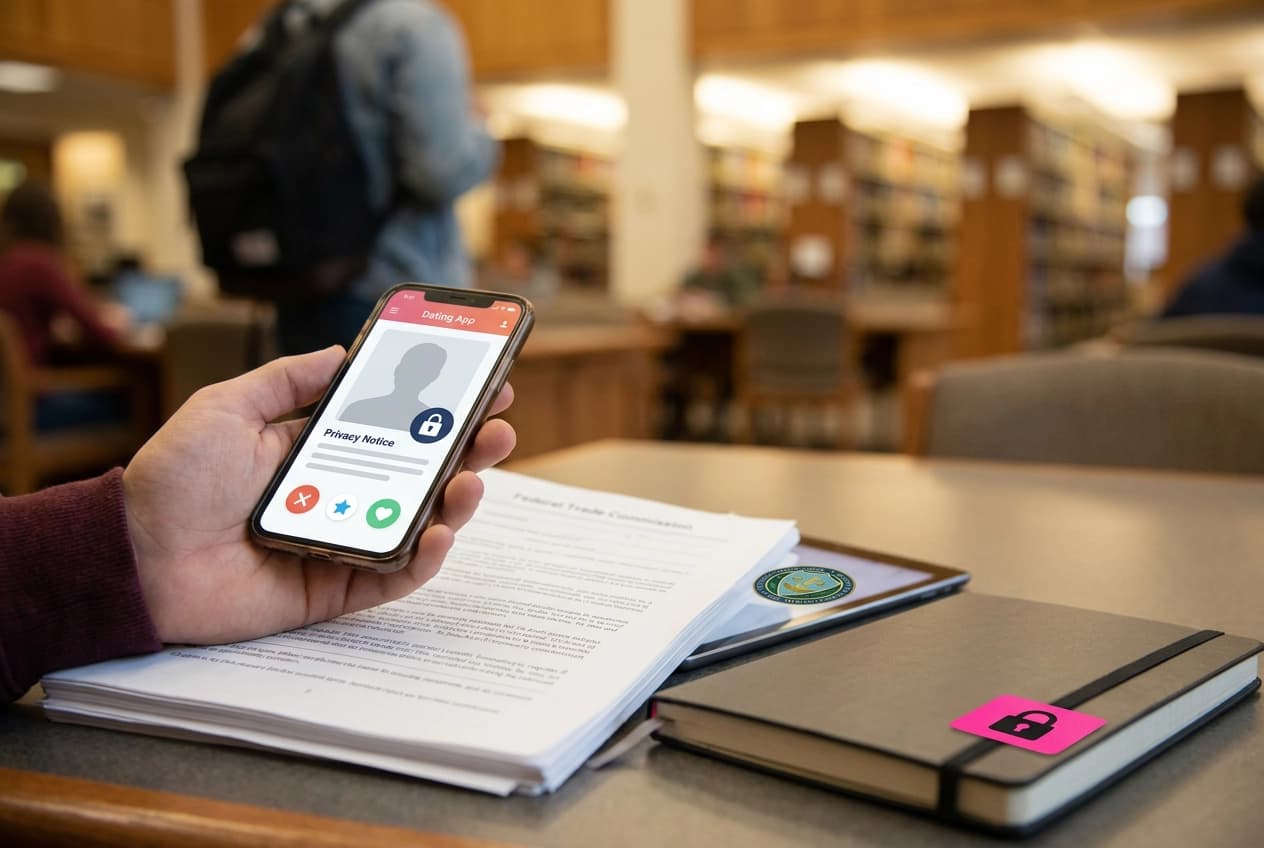
Imagine opening a dating app, swiping through profiles, and never once asking where your data goes. For a lot of students, that has been the norm. But March 2026 changed the conversation. The FTC took action against Match and OkCupid, alleging they deceived users by sharing personal data with a third party. The agency did not just frame this as a niche privacy issue. It treated the companies' data handling as a consumer-protection problem. That matters because privacy and verification are no longer footnotes. They are now live criteria students use to pick an app.
In this post, we will break down what the FTC actually did, why deception and unfairness are the two words that decide everything, and why this is a consumer-protection story. We will also cover what "verified student" should mean, what dating apps do with your data, the questions to ask before downloading, what an evasive answer sounds like, why this hits college campuses harder, and how to choose an app that passes the test. The bottom line: check verification and data handling first, ahead of user counts, features, or brand.
What the FTC Actually Did in March 2026
In March 2026, the FTC announced an action against a major incumbent dating app, alleging it deceived users by sharing personal data with a third party.
That headline gives you exactly three reliable things: who was involved, what conduct is alleged, and the legal theory (deception under Section 5 of the FTC Act).
That's it. Notice what's missing: no dollar penalty, no confirmed list of data categories, no user count. If you cannot trace a number to the complaint or the consent order, do not repeat it. That goes for anyone summarising the case for you, too.
Why is a dating app a natural FTC target? Because of what these apps hold: photos, precise location, and demographic data, the categories the FTC complaint actually named. One third party getting that is not a small thing.
Legal and academic commentary has followed the enforcement action. Trend, not one-off.
The sections below unpack what those data categories mean for students and what to do about them.
Deception vs. Unfairness: The Two Words That Decide Everything
Now that you know what went down in March 2026, here's the legal vocabulary hiding underneath the headline. Under Section 5 of the FTC Act, deception and unfairness are two separate tests, not one sliding scale (15 U.S. Code § 45).
Deception, in one line: what a company promised you versus what it actually did. If the privacy policy said your data wouldn't be shared and it went to a third party anyway, that gap is basically the whole case. No extra harm needed.
Unfairness, in one line: a substantial injury you couldn't reasonably avoid, and no offsetting benefit to consumers or competition (FTC Policy Statement on Unfairness).
Why the difference matters to you: deception cases are about broken promises. Your job is to read the promises and check whether the app's behaviour matches them. "We may share data with trusted partners" is not the same as "we never share your data," and that exact difference is what regulators zoom in on.
Simple sorting rule: told you one thing, did another? Deception. Harmful and hard to escape even when disclosed? Unfairness.

Why This Is a Consumer-Protection Story, Not a Niche Privacy Fight
What makes the March 2026 action significant isn't just that the FTC acted, it's which legal hook they used.
Here's the patchwork part: the US has no single federal privacy law covering every app. Instead you get sectoral rules plus a growing set of state laws, so your protection depends on where you live and what the company promised. The FTC's authority works this way, investigating and settling after harm rather than before it.
That reactivity has a practical consequence. The privacy policy becomes the contract that matters most to you, even though almost nobody reads it like one.
Which puts data handling in the same bucket as hidden fees, fake discounts, or a return policy that changes after you buy. It's a consumer-rights issue, not a niche tech complaint.
Takeaway: the FTC can act after the fact, but screening an app before you sign up is your first and fastest line of defence.
What 'Verified Student' Should Actually Mean
Here's the thing nobody tells you: "verified student" is three different things wearing the same label.
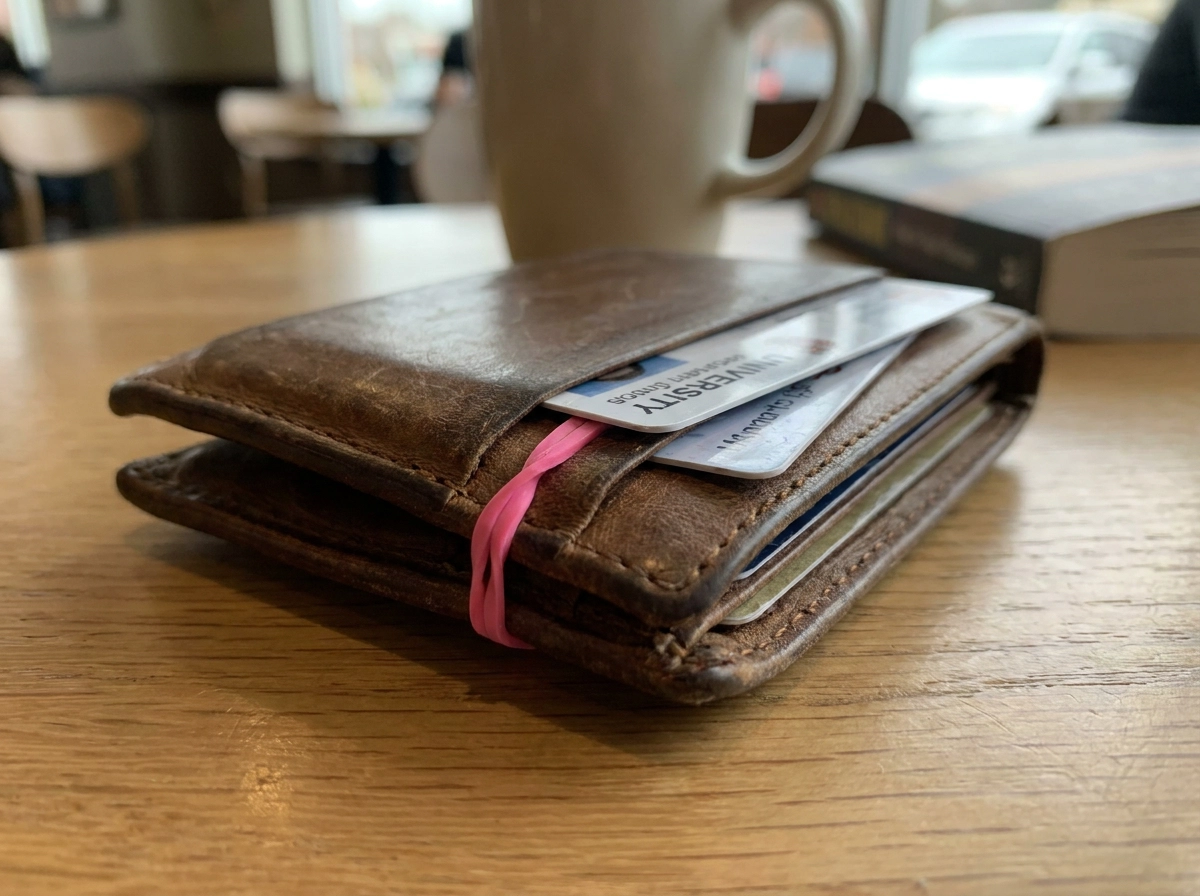
Level 1 is a .edu email check. Fast, low friction, and weak. A .edu email alone sits well below the evidence bar that NIST's identity-proofing standards contemplate.
Level 2 is a student ID upload matched against your account name. Better, but remote document checks are structurally weaker than in-person inspection, and remote identity checks are structurally weaker than in-person ones.
Level 3 is a government ID plus a live selfie or liveness check. Hardest to fake. It also means you've handed over sensitive documents, so ask the question almost nobody asks: what happens to my ID after I'm approved? Deleted, or retained?
That answer matters, because real verification is the difference between dating your actual campus and dating a random pool that happens to share an app.
What Dating Apps Do With Your Data (and What They Owe You)
Verification sorted. Now the other half of the trust equation: your data.
The FTC's September 2024 staff report, A Look Behind the Screens, found companies "generally collected vast amounts of data about users and non-users", a finding broad enough to cover dating apps that share platform infrastructure with social media services. Then the third-party question, asked properly: who receives it? Advertisers, analytics providers, data brokers, corporate affiliates? And for what stated purpose? "Trusted partners" answers neither.
Retention matters too. How long is data kept, and when you delete your account, does it delete, or just hide your profile while the records stay?
A straight answer names recipient categories, states a purpose, gives a retention period, and offers a real opt-out. A clear data policy names each category, states the purpose, and identifies the recipient type.
Legal baseline: no single privacy law covers every app, on either side of the border. Under the deception standard, promises must match practice, and provincial or state laws can add rights.
Tight campus pools make loose data handling worse, whether you're browsing the best dating apps in Ann Arbor or in Austin.
The Questions to Ask Before You Download Anything
Ask these five before you hit download, and screenshot the reply.
1. Verification: How exactly do you confirm I'm a student, and what happens to my ID or selfie after I'm approved? A good answer names the method and confirms deletion once you're checked.
2. Data sharing: Do you share or sell my personal data, and which categories of recipients get it? You want named categories, not "trusted partners."
3. Retention: After I delete my account, how long do you keep my location, photos and messages? Look for a real number in days or months, not "as long as needed."
4. Control: Can I opt out of ad targeting and analytics without losing matches and messaging? Opting out should not cost you the features you came for.
5. Accountability: Have you ever been subject to an FTC or state privacy action, and what changed after? The honest version names the case and the fix, such as a published retention schedule or tighter deletion rules.
Apps built on Verified. Private. Safe. principles answer all five without flinching. Evasion is your answer.
What an Evasive Answer Sounds Like
Once you've asked those five questions, the answer matters as much as the question itself. Here are five tells that someone is dodging you.
Vague plurals. In our view, "trusted partners," "affiliates," and "service providers" aren't answers, if an app can't name a category or give one example, it hasn't actually responded.
Deflection. You asked who receives your data and how long it's kept. They came back with encryption or "bank-level security." That's a different question. Locking the door doesn't tell you who has a key.
Conditional promises. "We never sell your data" sounds great until the same policy permits "sharing" with advertisers or analytics vendors. Note that selling and sharing are treated as legally distinct under state privacy laws like the CCPA, so read both words in any policy.
Deadline dodge. No retention period at all, or "as long as needed" with no definition of needed. A real answer names a timeframe.
Hostile friction. Deleting your account means opening a support ticket or emailing a human and waiting. If leaving is that hard, staying costs more than you think.
Spot two or more of these? Treat it as a no.
Why This Lands Harder on College Campuses
Vague answers hit different when the stakes are your campus. Dating apps hold identity-level data that was already sensitive enough to draw federal enforcement action.
The FTC's September 2024 staff report, A Look Behind the Screens, found companies "generally collected vast amounts of data about users and non-users", and that framing applies with full force to apps students carry into shared campus environments.
Campus-level governance frameworks like FERPA already treat institutional data seriously, which means verification expectations exist within the ecosystem. Verification plus private data handling should come as a package, not an upsell, and that's the standard Verified. Private. Safe. is built around.
How to Pick an App That Passes the Test
Campus life gives you a real verification signal, so use it.
Verification should tie to your actual campus. A student ID upload matched against your account name, or a government ID paired with a liveness check, clears a meaningfully higher bar than a .edu email alone. Then read the data policy. Plain language and specifics win, and what an app says it doesn't do with your information matters as much as what it does.
Ditto is a working example: it verifies college students, matches on values and preferences, and sends one curated match from your campus every Wednesday at 7 PM, complete with a date plan. The pool is campus-verified by design.
Last step: run the exit test. Send a deletion request before you commit. If leaving is buried behind a support ticket and a wait, that tells you plenty.
The Bottom Line: Check Verification and Data Handling First
So before you download anything, flip the order. Verification and data handling come first. User counts, features, brand recognition? Those are tiebreakers. If an app can't tell you how it verifies students or what it does with your data, that's your answer.
As the deception test in Section 2 makes clear, a privacy policy is an enforceable promise, and the gap between what an app says and what it does is exactly what regulators act on.
Those five questions from Section 6 remain your fastest filter, a vague reply is itself a data point.
Treat privacy like any other consumer right. You wouldn't sign up for a subscription with hidden fees. Don't sign up for an app with hidden data sharing.
Pick apps where verification is real and data sharing is limited by design. Those are the ones that still look good after the next enforcement action, not just before it.
Conclusion
Run through the five questions before you download, test the deletion flow, and let verification and data handling outrank user counts and brand recognition. The apps worth your trust earn it by design, before the next enforcement action, not after.