
Why Campus Matchmaking Beats Swiping for Canadian College Students
Swiping apps were not built for college life. See why campus matchmaking wins for Canadian students with verified identity, shared context, and real dates.
9 min read
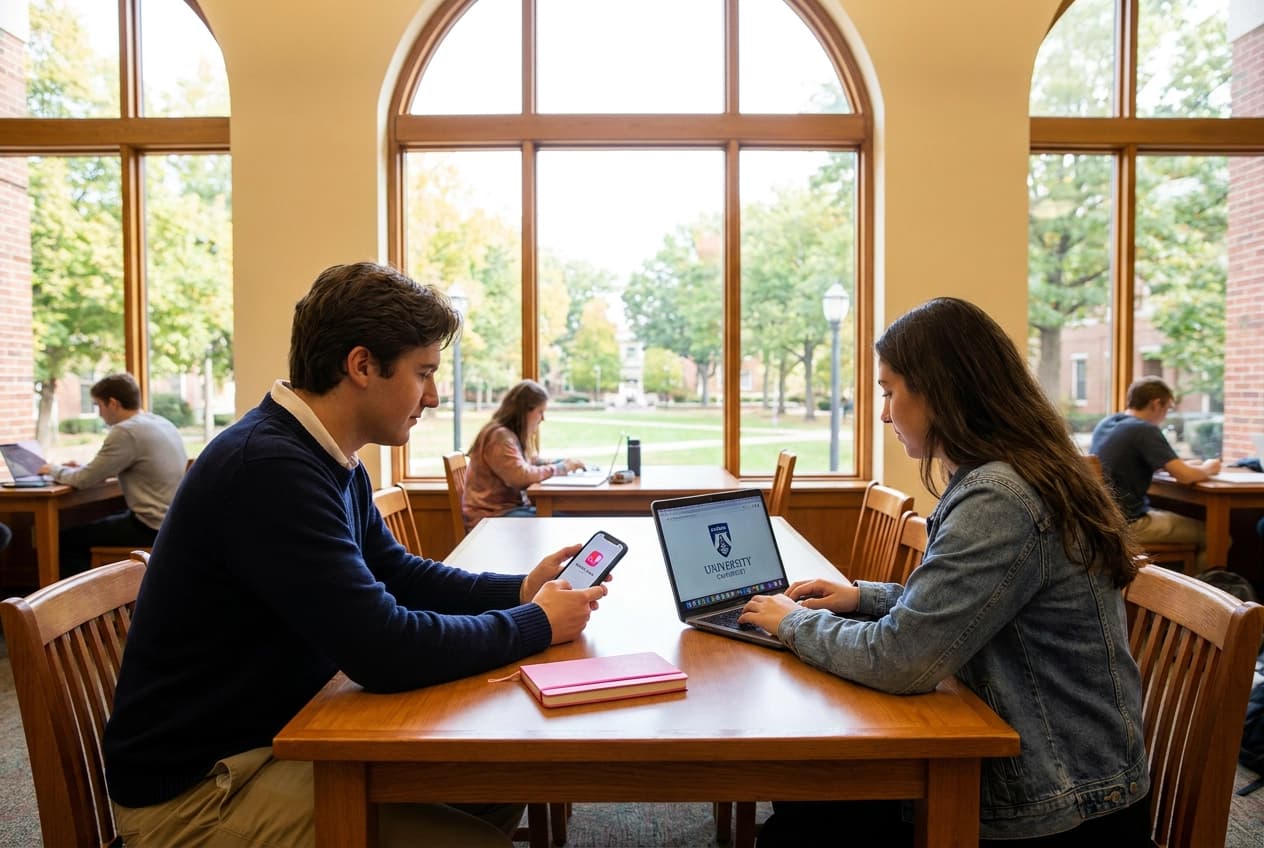
You open the app. You swipe right. You match. You never actually talk. Sound familiar?
If you are a Canadian college student, you have probably already figured out that the average dating app was not exactly built with your life in mind. These platforms were designed for a world of strangers, and yet here you are, potentially swiping past someone who sits three rows behind you in lecture.
Dating app usage among young adults has exploded over the past decade, but growing popularity has not translated into better connections. In fact, many students feel more burned out and disconnected than ever. The swiping model is gamified by design, and it shows.
This post makes a straightforward case for a smarter alternative: campus matchmaking. We will walk through why general swiping apps fall short for college students, how campus-based matching is fundamentally different, and why features like verified identity, shared spaces, and structured date plans actually lead to real connections. If you are ready to stop endlessly swiping and start genuinely meeting people, keep reading.
Dating App Fatigue Is Real and College Students Feel It Most
If you've caught yourself swiping for 45 minutes and closing the app with nothing to show for it, you're not imagining things. Dating app fatigue is a documented phenomenon, and college students are getting hit hardest.
About one-third of college students use a dating app at any given time, yet just over half of users report positive experiences overall. A massive chunk of people are logging on, grinding through the process, and walking away frustrated.
Part of the problem is design. The design rewards compulsive browsing, the next profile always feels slightly more promising than the conversation already in progress. Committing to actually meeting someone starts to feel irrational.
Adoption numbers tell an interesting story. Dating app use among 18 to 24 year olds jumped from 10% in 2013 to 27% by 2016, and platforms have only grown since. But more users hasn't meant better outcomes. Satisfaction simply hasn't kept pace with adoption.
For Canadian students, the friction runs deeper. Most major apps were built around US social graphs and urban markets. At a Canadian university, these platforms regularly surface matches with no shared context, no common spaces, and no real reason to connect. Students at Canadian universities hit the same wall: a tool built for strangers in a big city, dropped into a tight-knit campus community where it just doesn't fit.
What General Swiping Apps Get Wrong About College Life
Because these platforms treat every user as an anonymous stranger, the shared context that makes college uniquely connection-rich just disappears. You could be matching with someone two buildings away who has three mutual friends with you, and the app would have no idea and no reason to care.
The anonymity issue isn't just a convenience problem, it's a safety one. Undergraduate women using general dating apps report significant safety and consent concerns tied directly to the lack of identity verification. There's no layer confirming the person on the other end is who they say they are.
Then there's the conversation treadmill: match, message, maybe meet someday. For students already juggling classes, part-time jobs, and extracurriculars, that open-ended limbo rarely converts into an actual date. Most matches just quietly expire.
Campus Matchmaking vs. Swiping Apps: A Direct Comparison
So let's put both options side by side and see how they actually stack up.
Feature | General Swiping App | Campus Matchmaking |
|---|---|---|
Identity verification | Minimal to none | Verified student credentials |
Match pool | Anyone nearby | Co-located, verified students |
Shared context | None built in | Classes, dining halls, campus events |
Date planning | All on you | Pre-planned time, place, details |
Stakes | Full stranger encounter | Built-in social accountability |
Volume | Hundreds of options | One curated match |
The differences aren't small. Over 80% of dating app users say they want platforms to verify age, photos, and location, yet most general apps still don't do it. Campus matchmaking makes verification the starting point, not an afterthought.
Match quality follows directly from that. A general online dating app pulls from a wide radius of strangers who share nothing with you. A campus platform draws from people who already eat at the same dining hall, walk the same quads, and move through the same social world. That's a fundamentally stronger signal than geographic proximity alone.
Structured matchmaking also removes date-planning friction entirely, a set time, place, and context replace the open-ended limbo that kills most matches.
Finally, volume isn't the win people think it is. We think connection deserves better than an endless scroll where the next profile always feels slightly more promising than the current one. One well-matched person beats a hundred low-quality options every time.
Shared Context Changes Everything About Matching
That side-by-side comparison lays out the what. Here is the why underneath it.
When two students already share a campus, they bring an enormous amount of common ground to a first conversation before a single message is sent. Same buildings, overlapping schedules, possibly mutual friends, definitely shared campus culture. That implicit context is doing a lot of quiet work.
There is also a real anxiety difference. A match from a general dating app is a stranger encounter with no social safety net. A campus-based match carries natural accountability; you are both part of the same community, and that lowers the stakes considerably. It does not need to be a big deal if it does not click.
That lower pressure means there is less reason to hesitate, the stakes of showing up are lower because the social context is already there. Where swipe apps filter on photos, campus matchmaking filters on values within a verified community.
If you want to see how Ditto puts this into practice, their FAQ breaks it down clearly.
Why a Structured Date Plan Beats Open-Ended Swiping Every Time
Shared context gets you to the match. But here is where most swiping apps quietly fall apart: the gap between matching and actually meeting someone.
Structured date planning solves this by removing the decision entirely. Removing logistical decisions from the equation, when to go, where to go, who proposes it, eliminates the friction that causes most matches to quietly expire. A concrete plan converts; an open-ended match rarely does.
This is exactly how Ditto is built. Every Wednesday at 7 PM, you get one curated match from your campus, paired with a complete date plan already figured out for you. No swiping, no "let me know if you want to hang sometime," no planning paralysis. Just one good match and a clear next step. You can check the FAQ for the full breakdown of how the matching process works.
That Wednesday drop also does something the endless scroll of a typical online dating app never can: it becomes a low-key weekly ritual instead of a compulsive daily habit. One match, once a week, with everything sorted. That is a genuinely different relationship with dating.
Safety and Verification Are Not Optional Features
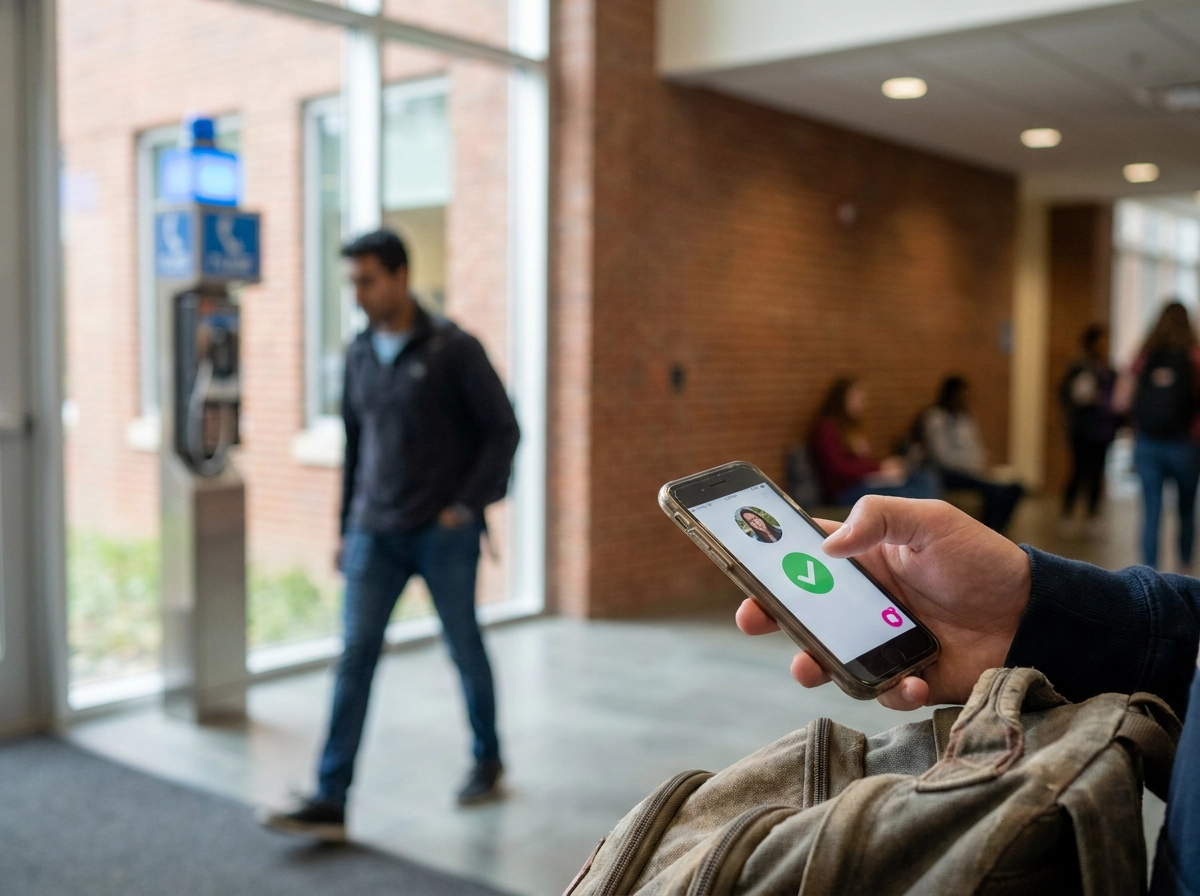
Safety concerns with anonymous apps are well-documented, but a campus-based platform flips the dynamic entirely.
When both people are verified students at the same institution, there is built-in social accountability before you even say hello. You are not meeting a stranger from the internet; you are meeting someone who shares your campus, your community standards, and your student code of conduct.
That accountability does more than reduce safety risks. Verification removes the anonymity that makes deception possible in the first place.
Canadian campuses also come with their own support infrastructure: student services, conduct offices, and community norms that most general online dating apps have no connection to whatsoever. A campus matchmaking platform that operates within that ecosystem works with those structures rather than around them.
For students who are newer to dating or figuring it out for the first time in a post-secondary setting, that matters a lot. Jumping straight into a general dating app with no guardrails is a high-stakes move. Verified campus matching is a genuinely lower-pressure starting point, because the social context is already there before the first message is sent.
Canadian College Students Deserve an App Built for Their Actual Lives
All of that accountability and verification matters even more when you consider who actually built the apps most students are using. The biggest names in online dating, including the ones that come up when you search for the best dating app or look up something like the Hinge dating app, were designed around large US urban markets. Their matching logic, their social graphs, their entire architecture reflects that origin. Canadian campuses were never the target.
That gap shows up in practice. Canadian college life runs on its own rhythms: fall orientation weeks, reading breaks, residence move-in chaos, campus pub nights, end-of-semester cramming. The social scale is genuinely different from swiping through an entire city. You are not looking for someone across town; you are looking for someone who might already be eating in your dining hall.
An app built specifically for campus communities can actually work with those rhythms. Instead of surfacing strangers who share a postal code, it pulls matches from a verified pool of people who share your campus, your academic calendar, and your immediate social world.
That shared world is a bigger deal than it sounds. When your match is a verified student at the same school, they are already woven into your extended social fabric, through mutual friends, shared spaces, and overlapping schedules. The connection starts with context rather than starting from zero. It feels real rather than transactional.
Ditto was built around exactly this idea. It operates campus by campus, matches only verified students, and treats the campus environment as a core feature, not an afterthought.
Stop Swiping. Start Actually Meeting People.
Campus matchmaking, verified identity, shared context, no planning friction, is a fundamentally different approach.
For Canadian college students, this difference is especially real. A general online dating app built for urban strangers in a US market cannot replicate the tight, co-located social fabric of a Canadian campus. An app designed around your community can.
If you are done with the scroll, Ditto was built for exactly that feeling. Every Wednesday at 7 PM, you get one match from your campus, one complete date plan, and zero swiping required. It is not a dating app with more features. It is a fundamentally different approach.
The best dating app for college students is not the one with the biggest user base. It is the one designed around how you actually live. Your campus, your schedule, your community. That is what real connection looks like, and it has been waiting for you right outside your residence door.

Conclusion
Swipe apps were built for strangers. Ditto was built for your campus.