
Campus Matchmaking in Canada, Explained Without the Hype
Campus matchmaking is a mechanism, not a filter. Here's how one campus, one match, and a pre-planned date actually work for students.
11 min read

Imagine opening a dating app on a Canadian campus and seeing not fifty profiles, but one person, one plan, and a real date already on your calendar. That is the basic idea behind campus matchmaking. It is not a feature layered on top of a swipe app. It is a different mechanism. Campus matchmaking starts with a closed, verified pool from one campus. Then it gives you one match on a schedule. The date shows up already planned. So the unit of value changes: instead of hours browsed, you get one date that actually happens. In this tutorial, we will explain what campus matchmaking actually means, why one campus is the whole point, why one match on a schedule is not a feed, and how the date arrives ready to go. We will also look at why this is not just a filter on a swipe app, what changes compared with browsing, a quick note on verified pools and safety, and how to tell if campus matchmaking fits you. By the end, you will know what to do next.
What Campus Matchmaking Actually Means
Campus matchmaking is a system that introduces you to one verified student from your own campus, on a fixed schedule, with a date plan attached. It isn't a setting you switch on inside a browsing app.
That distinction matters, because a feature and a mechanism are different categories of thing. A feature changes how you browse: a filter, a badge, a boost. A mechanism changes what you get: one person, one time, one plan. Same word, different species.
So the unit of value isn't minutes in-app. It's one date that actually happens. If you're measuring a matchmaking product by hours spent browsing, you're measuring the wrong thing.
Here's an analogy, and it's only an analogy: professional matching systems like the APPIC psychology internship match run on a published schedule with published rules and a fixed result date. That's not a dating product at all. It's just a useful shape to point at, proof that calendar-driven matching is a legitimate mechanism rather than a gimmick.
What campus matchmaking isn't: not a swipe app with a college filter bolted on, not a speed-dating night, and not your friend setting you up. It's a scheduling and verification system that happens to be about dating, which is why it feels so different from swiping through strangers on a general app.
Why One Campus Is the Whole Point
Here's the thing about a closed pool: your possible matches stop at your school's gates. A student email or campus login gates entry, so everyone inside is an actual enrolled student, not an anonymous account with a stock photo.
That scale changes the vibe. A few thousand people you could realistically run into at the library feels completely different from millions of strangers, and honestly, that context does most of the work. Curious how much that shift matters? Here's why campus-only matching changes the equation.
Shared geography helps too. You and your match are both already on campus, so the date is a short walk instead of a 45-minute transit negotiation.
Safety sits underneath all of this. Campuses treat student dating as a standing safety-adjacent concern, enough that US institutions are required to address it formally under the Campus SaVE Act. Canada's postsecondary sector operates at comparable scale: Statistics Canada reports over a million students enrolled in Canadian postsecondary institutions, which means campus-bounded matching is as meaningful a constraint here as it is across the border. A verified, closed pool is a design response to that context, never a claim that any product solves it.
The trade-off is real: a smaller pool means fewer possible matches, so quality has to carry more weight than volume. That's the bargain.
One Match on a Schedule, Not a Feed
The smaller pool is only half the trade-off. The other half is timing: one match, one time.
Instead of infinite scrolling, a single match lands at a set moment. Ditto, for example, drops one curated match from your campus every Wednesday at 7 PM. Nothing arrives before that, and nothing arrives after. The cadence isn't a feature bolted on. It is the product.
Scarcity changes how you evaluate. With one person in front of you, you assess them as a possible human instead of measuring them against the next forty profiles. There's no queue to compare against, so "good enough to keep looking" stops being a thought you can have.
This shape isn't new, just unusual in dating. APPIC's internship match releases one result on a fixed date, a calendar-driven system running in psychology, not romance. It's an analogy, not a twin, but it shows a scheduled match is a legitimate mechanism rather than a gimmick.
What disappears: ranking fatigue, the "they're fine, but let me keep looking" loop, and the 2 a.m. re-open of an app you already closed. We think connection deserves better.
Now the honest part. If the one match isn't a fit, you wait. Usually a week. That's the real cost, and pretending otherwise would be the actual scam.
The Date Shows Up Already Planned
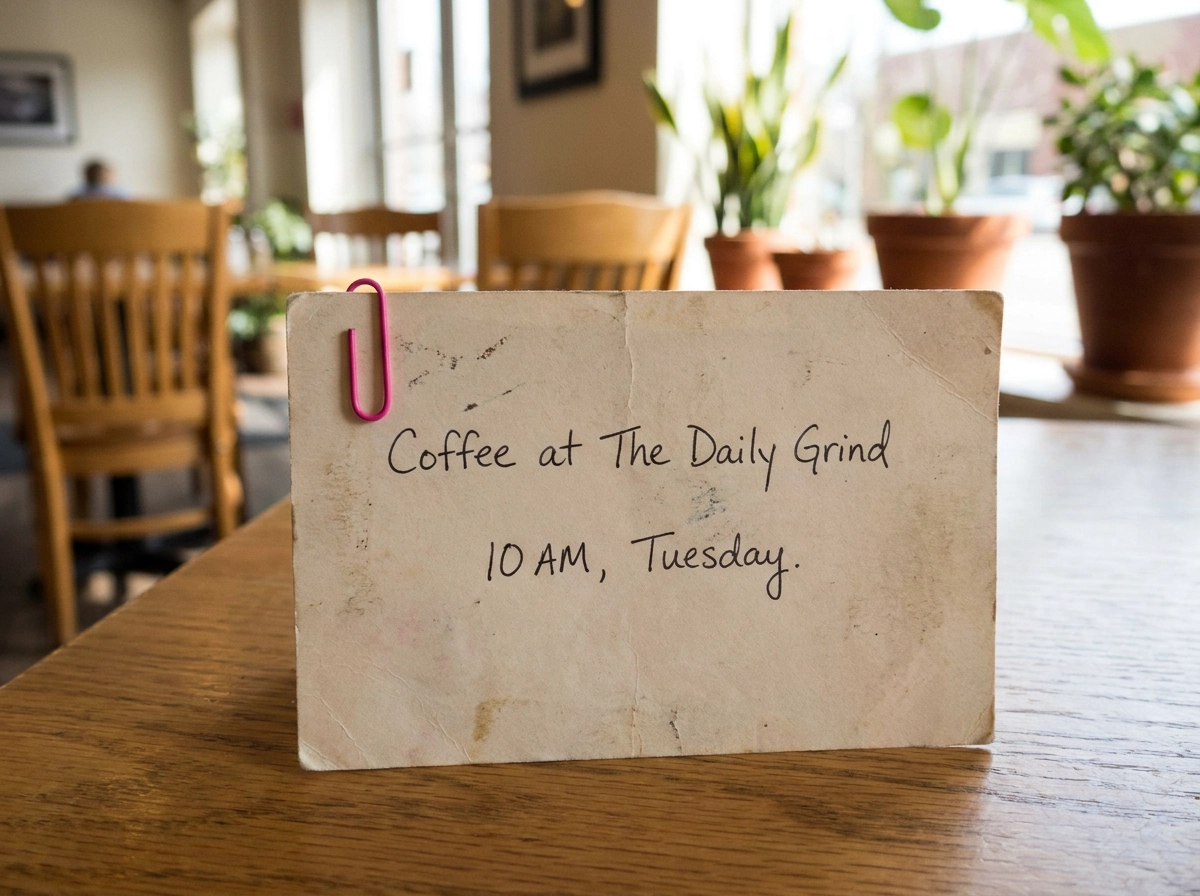
The match is not the whole delivery. Along with it comes a plan: a time, a place, and who you are meeting.
That kills the limbo that stalls most app chats. No more "so, want to hang out sometime?" that never lands on a calendar. There is already a when and a where.
Campus logistics do the rest:
A coffee shop, a campus pub, a walk between buildings
No car, no reservation, no 40-minute transit negotiation
You are both already there
It also cuts first-date decision fatigue. You are not scrambling to pick a venue for a stranger, and you are not walking into somewhere unfamiliar alone. The spot is part of the match.
Want the whole mechanism in one line? One curated match from your campus every Wednesday at 7 PM, with the date plan attached. That is Ditto.
Curious how the matching actually works? The FAQ covers the basics.
Why This Isn't Just a Filter on a Swipe App
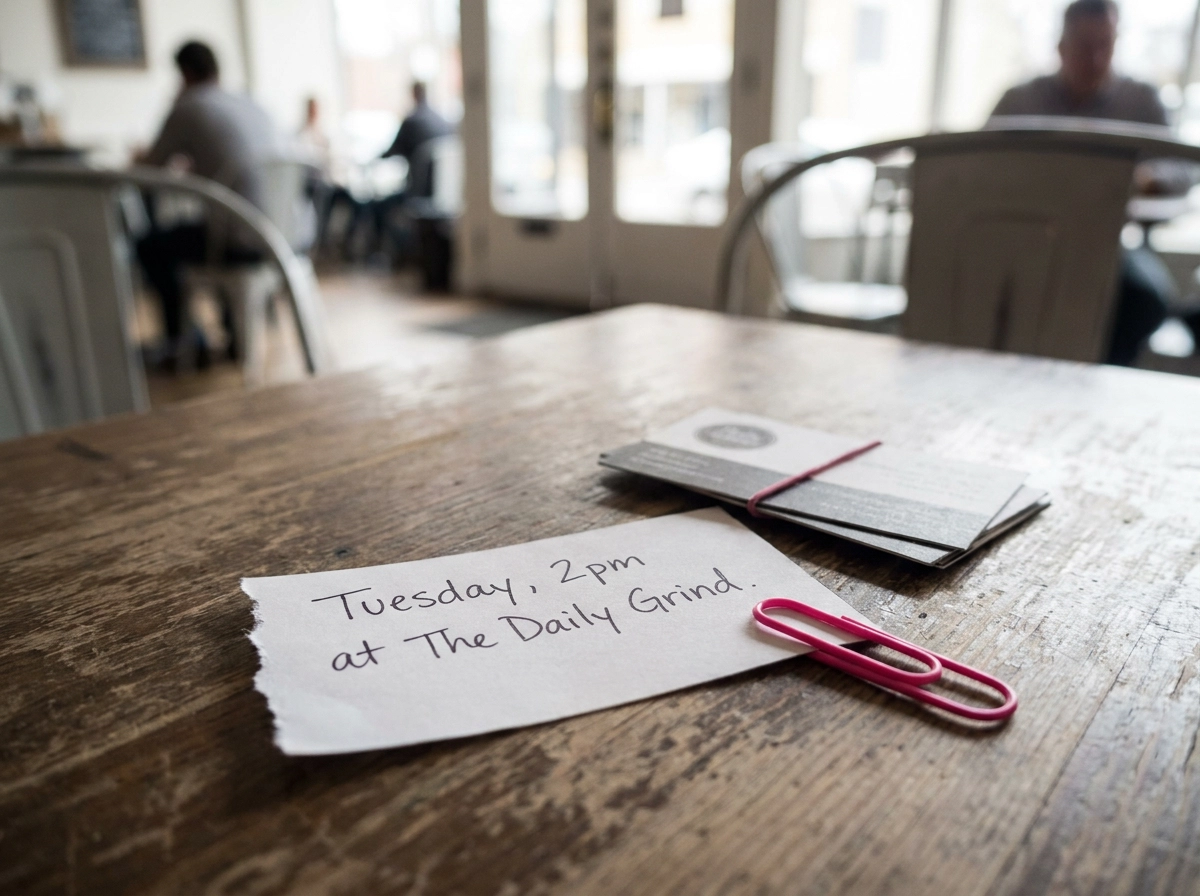
Here's what actually changes when the answer is "a plan."
A filter changes which profiles you see. A mechanism changes whether you meet anyone at all. Different questions, different answers. You can filter a feed perfectly and still never end up in a coffee shop with anyone.
That's because the incentives pull opposite ways. Browsing products are built for engagement: minutes in app, sessions per week, the scroll. Matchmaking is built for an outcome: a date that actually happens. Bolt one onto the other and the engagement target wins, every time.
Worth saying out loud: this is mechanism versus mechanism, not product versus product. The argument holds no matter what's on your home screen.
So carry one test question: does this product give me more to look at, or does it give me a plan? That fork sorts almost the whole category.
And watch your own behaviour. If you close an app feeling worse than when you opened it, you've got a browsing problem, and a better filter won't fix it.
Campus Matchmaking vs Browsing: What Actually Changes
The effort-timing flip is the core trade: browsing front-loads hours, matchmaking front-loads one profile.
That's the outcome flip too. Browsing hands you options; matchmaking hands you a commitment with a time and a place on it.
The pool flips as well. Browsing is open and effectively global; matchmaking is closed and verified to your campus. The person across the table is someone you could genuinely run into again, which changes how safe and how low-lift the first meeting feels. The best first-date ideas for Canadian college students covers why the plan itself does so much of that work.
Decision fatigue is the part most people underestimate. Dozens of micro-choices collapse into one, and you stop ranking profiles and start evaluating a person.
Failure modes differ, and that's the real argument. Browsing fails quietly: nothing happens, you learn nothing, and you open the app again tomorrow. Matchmaking fails visibly; the date happened, it just didn't click. Uncomfortable, yes, but far more informative.
Want a quick gut check? Sketch two columns with five rows: effort, outcome, pool, decisions, failure mode. Fill it in honestly and the better fit usually becomes obvious.
A Quick Note on Verified Pools and Safety
Quick honesty check: verified is a floor, not a force field.
Campuses already operate inside this duty-of-care frame, as noted above. The research base is mature too: one dating-violence prevention meta-analysis screened 14,540 articles across 28 databases, and that is the scale of evidence campuses are working from when they build safety programming. A verified, closed pool is a design response to that context, not an endorsement of any product.
What verification does is narrow and expensive. Proving you're a real student raises the cost of running a fake account, so most fakers don't bother, and it shrinks the pool to people physically on your campus right now.
What it doesn't do: it's not a background check and not a safety guarantee. Keep the basics. Meet in public, tell a friend where you'll be, and use campus venues you know.
The limit, plainly: no matchmaking product has been shown to reduce dating violence. The research says nothing of the kind.
Treat verification as a filter that makes lazy fakes harder, then run your own safety habits on top.
How to Tell If Campus Matchmaking Fits You
The format question is simpler than the safety one.
You'll probably like campus matchmaking if browsing has worn you down, you want fewer but more intentional introductions, and you're comfortable letting a system make the first call. You'll probably dislike it if you genuinely enjoy the choosing part, want control over who reaches your inbox, or care more about volume than fit.
Campus size matters. A small campus makes a closed pool feel familiar, almost intimate. A large one keeps the variety while still bounding it to people you could actually run into. For a sense of how much campus dating shifts from place to place, look at how campus dating plays out in Ann Arbor.
Your week matters too. A weekly drop suits anyone who'd rather have one thing on the calendar than a constant low hum pulling them to open an app.
So here's a two-question self-check:
Have you ever closed a dating app feeling worse than when you opened it?
Would you rather receive one plan than forty profiles?
Two yeses means the mechanism probably fits how you actually want to meet people.
What to Do Next
Think it might fit? Here is how to find out for real.
Write a short, honest profile. Skip the highlight reel. Lead with your values and what you actually want, because a curated match only works with what you give it. Three or four real lines beat a paragraph of vibes.
Check whether your campus is live. Ditto, the Wednesday-at-7-PM service described above, is built for verified college students. If your school is not on the list yet, you have your answer for now.
Say yes to the first plan, even if you are unsure. The low lift is the whole point. A coffee on campus costs you an hour and tells you more than a week of texting.
Keep the safety habits covered above.
Reassess after two or three matches. Ask one question: did actual dates happen, or did I just browse? That answer tells you which mechanism fits you.
Then let the calendar do the work.
Conclusion
The mechanism is now clear: one verified match, one plan, one campus. A short, honest profile gives the match something real to work with, while a low-lift first date, coffee or a walk, tells you more than weeks of texting. If that sounds better than forty profiles and a low hum of app anxiety, check whether Ditto is live on your campus. Write three real lines, say yes to the first Wednesday plan, and keep your safety habits. Then let the calendar do the work.