
Why Double Dates Are the Lowest-Pressure Way to Date
Double dates and group dates on campus lower the pressure of a first meeting and show how someone treats their friends. Here is how to plan one.
11 min read
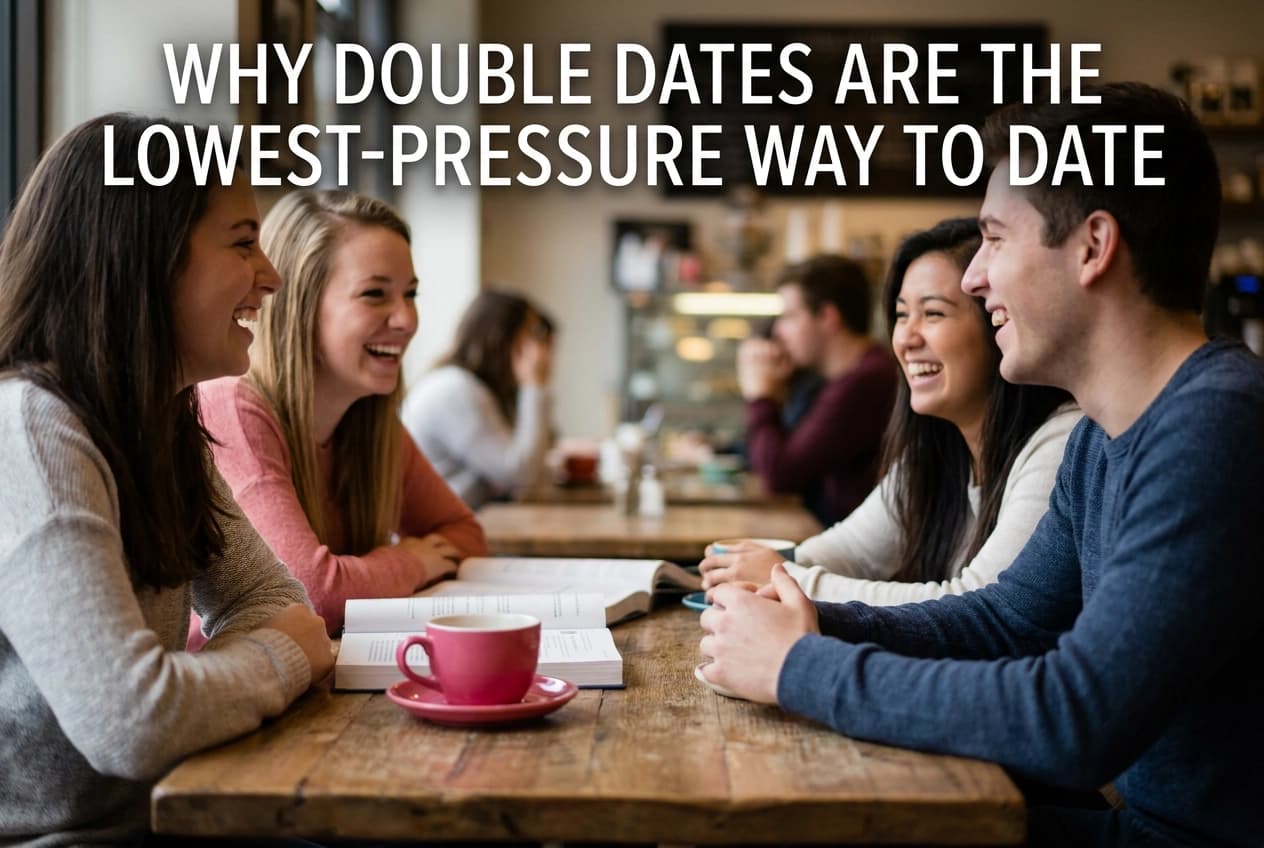
First dates on campus can feel like a pop quiz you didn't study for. You're trying to be funny, interesting, and chill all at once, while also figuring out if you even like the person. That's a lot of pressure for one coffee. A double date flips the script. It's not a lesser date or a sign that someone isn't serious. It's a lower-pressure way to meet, talk, and see how someone treats their friends in real time. In this post, we'll look at why first dates feel so high-stakes right now, why a double date is not a lesser date, and what a group format actually reveals about someone. Then we'll share double date ideas that work on campus, like coffee and a walk across the quad, a free campus event or trivia night, and a dining hall dinner. We'll also cover friend date ideas, how to set up a double date without awkwardness, lower-pressure group hangs for couples, where Ditto fits in, and the simple takeaway: start small, start grouped.

Why First Dates Feel So High-Stakes on Campus Right Now
Dating feels heavy right now. Pew Research Center's 2020 report (based on fieldwork conducted Oct 2019) found nearly half of U.S. adults say dating got harder for most people over the last decade, and a majority of women reported harassing behavior from someone they had gone on a date with.
A one-on-one first date puts all that on two people: they own every topic, every silence, and every call about when to leave, with no third person to soften a rough moment.
Pew's terms include partnered, single, daters, casually dating. No single script exists for how fast or slow to move.
A 2020 systematic review of dating app research screened hundreds of abstracts and dozens of studies from 2016 to 2020, sorting findings by user traits, usage, motives, and risks.
Adoption climbed fast: 11% of American adults had used online dating in 2013; by Pew's 2019 survey, 30% had ever used a site or app.
All this pressure lands on the plan itself, which is why first-date ideas deserve real thought.
A Double Date Is Not a Lesser Date
Let's kill the assumption: a double date isn't training wheels or a downgrade from the "real" date. It's a different format with different strengths.
Add another pair and the conversational weight spreads. If the conversation dips, two more people can pick it back up. And if anyone wants out early, they can step away without it reading as a verdict on their date. That matters a lot for a first meeting.
Low pressure is also a better compatibility test than a high-pressure performance. People show more of who they are when they're not being interviewed, which is the signal why campus matchmaking beats swiping for Canadian college students is designed around.
One transparency note: existing double-date research studies couples, not first meetings. So "group formats give more signal" is Ditto's working hypothesis, not a proven finding. Test it yourself.
What a Group Format Actually Reveals About Someone
A group setting is basically a live demo. Here's what to actually watch:
How they treat their friends. Being polite to you is easy; being kind to someone who has known them for years is almost impossible to fake.
Whether they include you. If they keep pulling you into the conversation instead of talking across you with their friend, that habit says a lot about how they would handle a relationship.
How they handle logistics. Who they invite, how they introduce you, who pays, whether they follow through. Values leak out in the small stuff.
Whether they can share the spotlight. Can they let someone else be funny without getting competitive or sulking? Exclusion stings even when it is minor, and it plays out as a strong situation where personality barely matters.
How their friend looks. If their friend seems left out, that is a read on your date's judgment. Ostracizing others carries real costs, even when it feels justified.
Double Date Ideas That Actually Work on Campus
Now that you know what to watch for, here's where to actually go. Hold every option to four filters: public location, cheap or free, easy to leave early, and something to look at so silence never gets weird. The public part has research behind it: first-date settings shape what people expect, and party-style spots can push those expectations further.
The three formats below all fit a student budget and a campus setting. Remember, the format is the point, not the venue. A great double date at the dining hall beats a stressful one at a fancy restaurant. Curious why campus-only matching changes the equation? That context helps here too.
Idea 1: Coffee and a Walk Across the Quad
Here's the plan: hit a campus coffee spot, order together, then take a familiar loop so the movement carries the conversation. Nobody has to stare across a table for two hours.
Pair up on purpose. If you invited your friend, walk with their friend for part of it so nobody feels like a spare part.
About 90 minutes is a reasonable target, long enough to relax, short enough that nobody's checking the time. A short good date beats a long okay one, and a walk is the easiest format to extend if it's going well.
It's cheap, whatever your coffee costs. That matters when everyone's on a student budget.
Why it works as a double date? Walking naturally splits the group into pairs and back into a group, so the energy resets instead of stalling. Curious how low-pressure formats fit into matching? Our FAQ breaks it down.
Idea 2: A Free Campus Event, Game, or Trivia Night
Walking the quad not your vibe? Your campus is already running free events you can slide into: a basketball or soccer game, a student concert, an art show, trivia at the student union, or a club showcase. Check the student activities calendar and pick something with a shared focus. When everyone's reacting to the same thing, nobody has to generate conversation out of thin air.
Trivia works well for groups. It gives everyone a shared focus, which takes the pressure off generating conversation. Arrive a few minutes early so you can claim seats together, and agree on a loose end time before you go so nobody's stuck guessing when to leave.
This is also the format that scales, up to four people. Curious how values-based matching works before you invite anyone? The Ditto FAQ breaks it down.
Idea 3: Dining Hall Dinner and a Walk Back
If trivia felt like too much planning, this one is basically zero effort: eat where you already eat. The dining hall kills two problems at once. No restaurant to pick, no bill to split awkwardly. Everyone just swipes in with their meal plan.
The setup also does the work for you. Someone gets up for seconds, someone refills a drink, someone clears trays. Those little breaks keep the conversation from stalling.
Then walk back together. That ten minutes is usually when everyone loosens up and the actual talking starts.
One tip: invite your friend's friend, not just your friend. Four people at a table works way better than three plus a tagalong.
And text the next day. Someone has to close the loop, and it's usually whoever set the plan up.
Friend Date Ideas That Set Up a Group Date Later
Friend time isn't a consolation prize. It's the practice run. A library study session that turns into dinner, a campus movie night, a rec league game, a thrift run, a boba walk: every one of these shows you how someone acts in a group before you ever bring a match around.
Cap it at three to four people. Bigger groups split into side conversations and you learn nothing about anybody.
Give everyone a job. Pick the playlist, hold the snacks, choose the movie. A small role stops anyone from drifting into third-wheel mode.
Keep it cheap and close. On or near campus, near-zero cost. The whole point is that saying yes is easy.
Run one friend date first. Then you know your group can absorb a new person gracefully before you add a match.
Same logic applies if you want fresh scenery: what are the best date ideas in Austin?
How to Set Up a Double Date Without It Getting Awkward
You've got your friend crew sorted. Here's how to run the double date without it getting weird.
1. Ask in one clear message. Name the plan, the day, and the place: "Trivia at the union Thursday at 8?" Specific beats "we should hang sometime." Vague invites create more anxiety, not less.
2. Pick a public spot, you've already got three solid options above. A soft 90-minute window is a reasonable rule of thumb, no source proves it, but most people report short good dates beat long mediocre ones.
3. Settle money before you go. Say it plainly: everyone covers their own, or you split it evenly, so no one has to do math under social pressure.
4. Bring the right friend. Pick the warm one who includes people, not the one who turns the night into a competition. This is judgment, not science, but it matters.
5. Plan one thing to do and one thing to talk about. Trivia, a board game, a walk, plus a shared topic both groups have in common. That covers the first-ten-minutes risk.
6. Debrief afterward. Check in with your friend later, without your dates around, so you both get an honest read.
Date Ideas for Couples Who Want a Lower-Pressure Group Hangout
Already matched up? Group hangs still pull their weight. The same public-spot, clear-end-time rules apply. Double dates keep your relationship from becoming a closed loop, and watching your partner in a social setting is its own kind of signal.
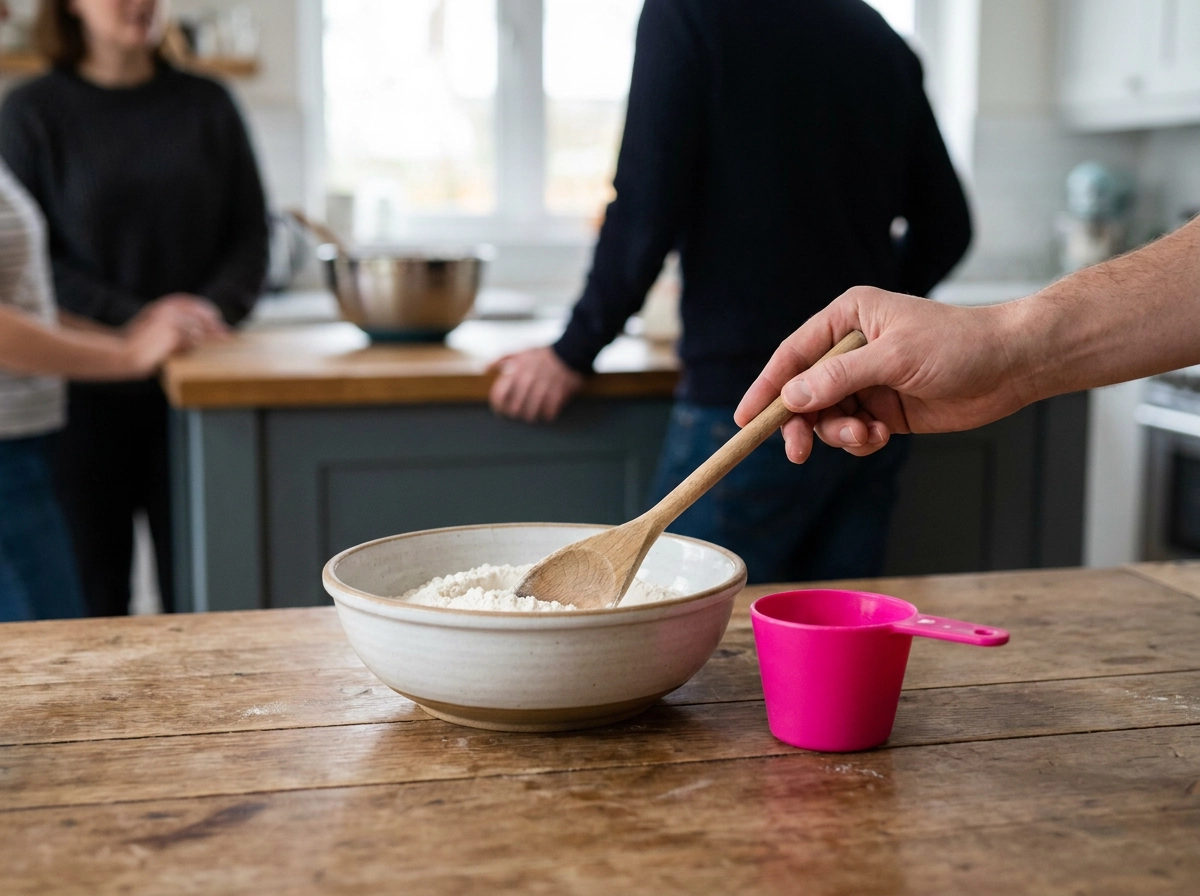
Easy formats: trivia night, a cooking or baking night where each pair makes one dish, an intramural or pickup game, a campus concert, or a board game cafe. If you're near a college town like Athens, these local date ideas make solid double-date bases.
It helps to rotate who plans so one pair doesn't always feel like guests. Skip anything that turns into a scoreboard between couples unless everyone's genuinely competitive.
Group dates work best as a complement to one-on-one time, not a substitute.
Where Ditto Fits Into All of This
If all that planning sounds like a lot, this is where Ditto comes in. Ditto is a matchmaking app built for college students, a personalized friend that sets up real dates on campus by matching verified students based on their values and preferences.
Every Wednesday at 7 PM, you get one curated match from your campus plus a date plan: the time, the place, and details about your match.
That plan is the part that matters. Most of the friction in a first date is deciding what to do, where to go, and how long to stay. Having those answered in advance removes a lot of the pressure this whole article is about.
You can layer the group-format thinking on top: use the curated plan as your base and, if it feels right, invite a friend pair to make it a double date.
No hard sell here. A values-based match pairs well with a low-pressure format because both are about seeing how someone actually behaves, not how well they perform.
The Takeaway: Start Small, Start Grouped
Treat a double date like a real date, not a warm-up. It trades intensity for honesty, which is exactly what a values-based match needs.
This week: pick one friend date idea from the list, run it, and watch how everyone treats each other before you invite a match in. Then send one double date invitation, name the place, day, and time in a single message.
Watch three signals: how your date treats their friend, whether they include you, and how they handle small logistics.
One honest note: research shows dating often feels high-stakes and unsafe, but there's no data proving group dates fix that. It's a reasonable hypothesis worth testing yourself.
Conclusion
Double dates are not lesser dates. They are real dates with lower stakes, clearer context, and more honest signals.
You are not chasing a performance. You are creating room for something real to show itself.