
Ready for Intentional Dating, Not Just Tired of Swiping
Intentional dating isn't a label. It's a readiness check on your time, availability, and honesty. Assess first, then choose the right match.
12 min read
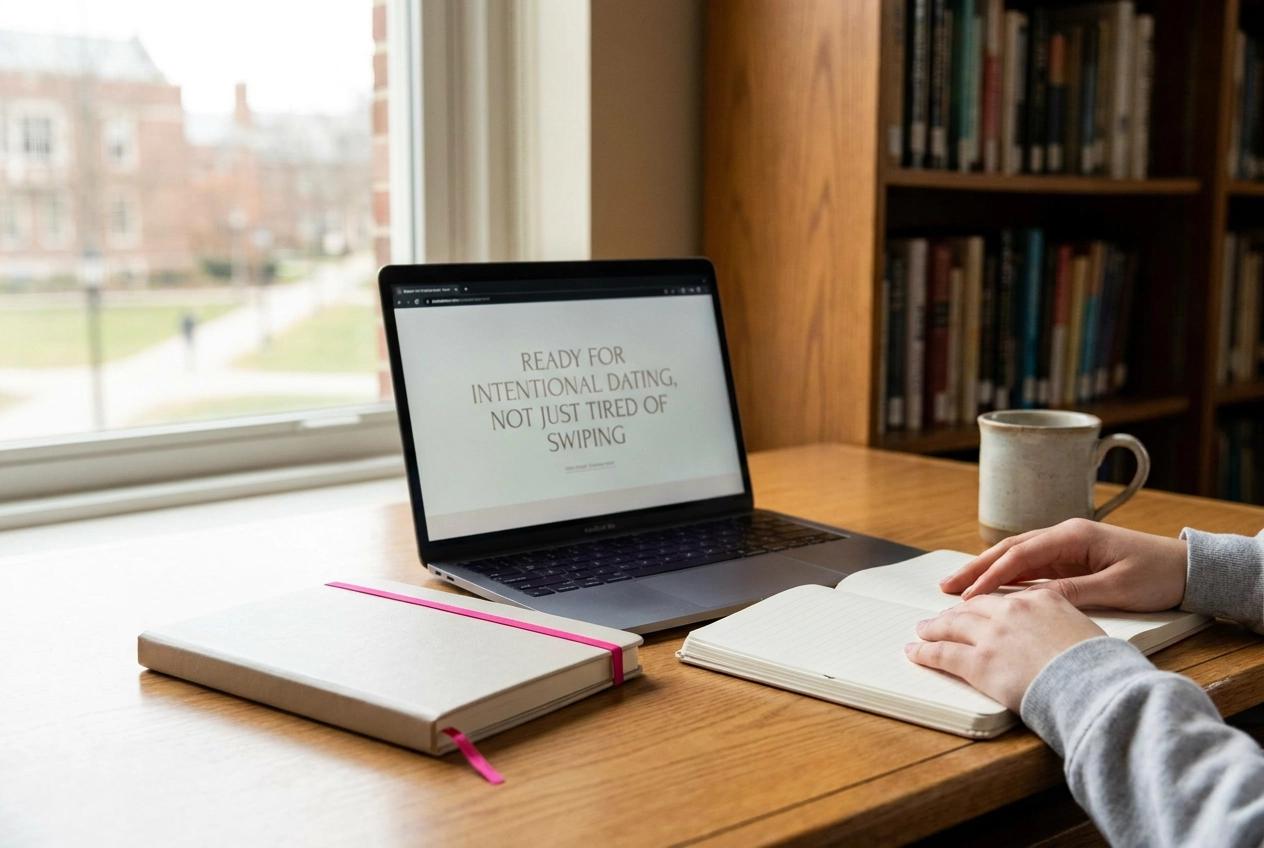
So you're over the endless swiping. Same. But being tired of the apps isn't the same as being ready for intentional dating. Intentional dating isn't a personality type or a cool label you slap on your profile. It's a readiness question: what can you honestly offer a match this semester? Before you download another values-based app, it helps to check your time, your availability, and whether you're being real about what you actually want. Values matching only works if you show up as yourself, not as a version of you that you can't keep up with past week two.
In this post, we'll break down what intentional dating actually means, why swipe fatigue isn't readiness, and four quick checks to run before you match. We'll also cover how to pick apps you can actually match on, tips for staying intentional once you start dating, and why assessing first is the move. No pressure to have it all figured out. Just get honest before you get back out there.
What Intentional Dating Actually Means

Intentional dating is simpler than it sounds: deciding in advance what you're looking for, how much room you actually have for another person right now, and how you'll act when things get real. Rather than reacting to whatever the algorithm hands you, you show up with a plan. Want the longer version? Here's what intentional dating actually is for students.
Here's the core claim of this post: intentional dating gets talked about like a personality trait ("I'm just an intentional person"), but it's really a readiness question about what you can honestly offer someone this semester.
Default-mode dating runs the opposite way. The goal is momentum, the vibe is "let's see where this goes," and no version of you is actually available to go anywhere.
College adds a clock. A semester is roughly 15 weeks, so your availability in February isn't your availability in April. Intentionality means planning around that reality instead of pretending the calendar doesn't exist.
And it's worth naming what intentional dating isn't, so you stop self-rejecting: it isn't celibacy, it isn't seriousness on demand, and it isn't a moral upgrade over casual dating. You're not signing anything. You're just deciding before you swipe instead of after.
Why Swipe Fatigue Isn't the Same as Being Ready
Here's the trap: swiping until your thumb hurts and getting bored by shallow matches both feel like a signal. Neither is evidence you have anything different to offer a match. It's just evidence you're running the same play and hoping for a different result.
The landscape backs that up. Pew found that about 30% of U.S. adults have used a dating site or app (2020), and roughly half of those users call their experience positive (2023). That's U.S. adults, not college students, so treat it as context rather than a campus report card. It's also why campus matchmaking beats swiping for Canadian college students: a swipe deck is built for strangers, not people who already share your dining hall.
The discouragement is real, though. Nearly half of U.S. adults say dating has gotten harder for most people over the last 10 years (Pew, fielded October 2019), which explains the app-hopping instinct. Safety stays on the list too: Pew's 2020 and 2023 reports both flag harassment as an ongoing issue, and a majority of women say they've dealt with harassing behavior from someone they dated.
So name the actual problem before you download anything new. Tired? The fix is a break. Nothing landing? The fix is changing your inputs, which starts with an honest inventory of your time and availability.
Readiness Check 1: Do You Actually Have the Time?
So if nothing's landing, start with your calendar. Not the ideal one, the real one. Write down last week: classes, shifts, practice, club commitments, and the hours that disappeared with no explanation. Borrow the time-use diary trick: log one actual day, hour by hour, and watch the gap between planned and lived.
Now the math for one date. Build-up, travel both ways, the date itself, decompression after, plus the follow-up text. Two to three hours of calendar time is the floor, not the ceiling. That's why weeknight dates that fit a student timetable work better than open-ended hangouts: real start, real end.
Here's the part people skip: the second date is the bottleneck. The first happens on excitement. The second only happens if you actually have bandwidth.
Free time and usable time are not the same thing. A wide-open Thursday means nothing if you're running on four hours of sleep. You can have room in your schedule and no room for another person.
Draw the line: if the only slot you'd ever offer a match is your last waking hour on a weekday, you have time to swipe but not time to date.
Readiness Check 2: Is Your Availability Real or Theoretical?
Time is only half the equation. Logistical availability means your calendar has room; emotional availability means you're actually open to someone taking up space in it. Most people fail one and coast on the other, assuming the half they've got covers the half they don't.
The classic college version: you say yes to a match while already knowing you're leaving for a study abroad term, heading to an internship in another city this summer, or graduating in a few months. None of those are dealbreakers. Hiding them is.
Honesty test: would you tell a stranger that constraint on a first date, or let them find out later and call it timing?
Watch for the patterns that signal theoretical availability: matching fast and then going quiet, or keeping a match warm because it feels nice to have someone waiting. That's volume, not readiness. How AI matchmaking picks your one match every week flips that incentive, trading the endless feed for a single curated match.
Self-check: write what you'd say if a match asked what your next three months look like, then reread it and circle the hedges: probably, we'll see, kind of. If you can't say it straight, say it straight to yourself first.
Readiness Check 3: Can You Be Honest About What You Want?
Availability is the first honesty test. This one is the second.
This check isn't about wanting the right thing. It's about saying what you want without sanding it down into something you don't actually mean. Most dating frustration comes from two people running different structures and never saying so out loud, which is basically casual vs intentional dating in a nutshell.
That's the asymmetry problem: one person is auditioning for a relationship, the other is auditioning for nothing in particular, and neither announces it. Both leave confused.
So draft a script in your own head. Two sentences, short enough to actually say:
What I want right now: "I'm looking for something that could turn serious."
What I don't want: "I'm not trying to be somebody's late-night text."
Built-in honesty means saying the casual version before date one. Late honesty means saying it on date four, after someone caught feelings. That's not honesty anymore; that's damage control.
And yes, wanting something casual can be fully intentional. It just has to be stated and mutually understood upfront, not reverse-engineered after the fact.
Next up: can you show up as yourself?
Readiness Check 4: Will You Show Up as Yourself?
You just did the hard part: getting honest about what you want. Now here's the next layer. Does the version of you that shows up actually exist on a normal Tuesday?
Building a profile from your highest-energy self is a classic move. You list hiking, live music, maybe rock climbing. That version of you is real, but it shows up maybe twice a semester. The bill comes due around week three, when you're exhausted and can't fake enthusiasm for a trail you haven't touched since August.
This matters more with values matching than anywhere else. What values-based matching actually means for students comes down to one thing: the algorithm can only match the values you typed. If those values are aspirational, the match is accurate to a fiction, and the date feels off for reasons nobody can name.
Here's the tell. If you dread explaining a profile detail out loud, that's not nerves. That's a flag that you wrote for the algorithm instead of a person.
Less polished, more true. An interest you'd genuinely talk about for an hour beats one that sounds impressive for ten seconds.
Think of authenticity as a filter, not a virtue. Showing your real self makes bad matches fail fast, which is the whole point.
How to Pick Intentional Dating Apps You Can Actually Match On
Now that your profile isn't fiction, pick an app that asks for more than a photo. A platform built on two-second judgments can't deliver a considered match, so set the bar higher: it should require something real from you.
That's values-based matching in practice. You answer actual questions about how you spend your time, what matters to you, and what you're looking for. Matches get generated from those answers instead of an endless feed.
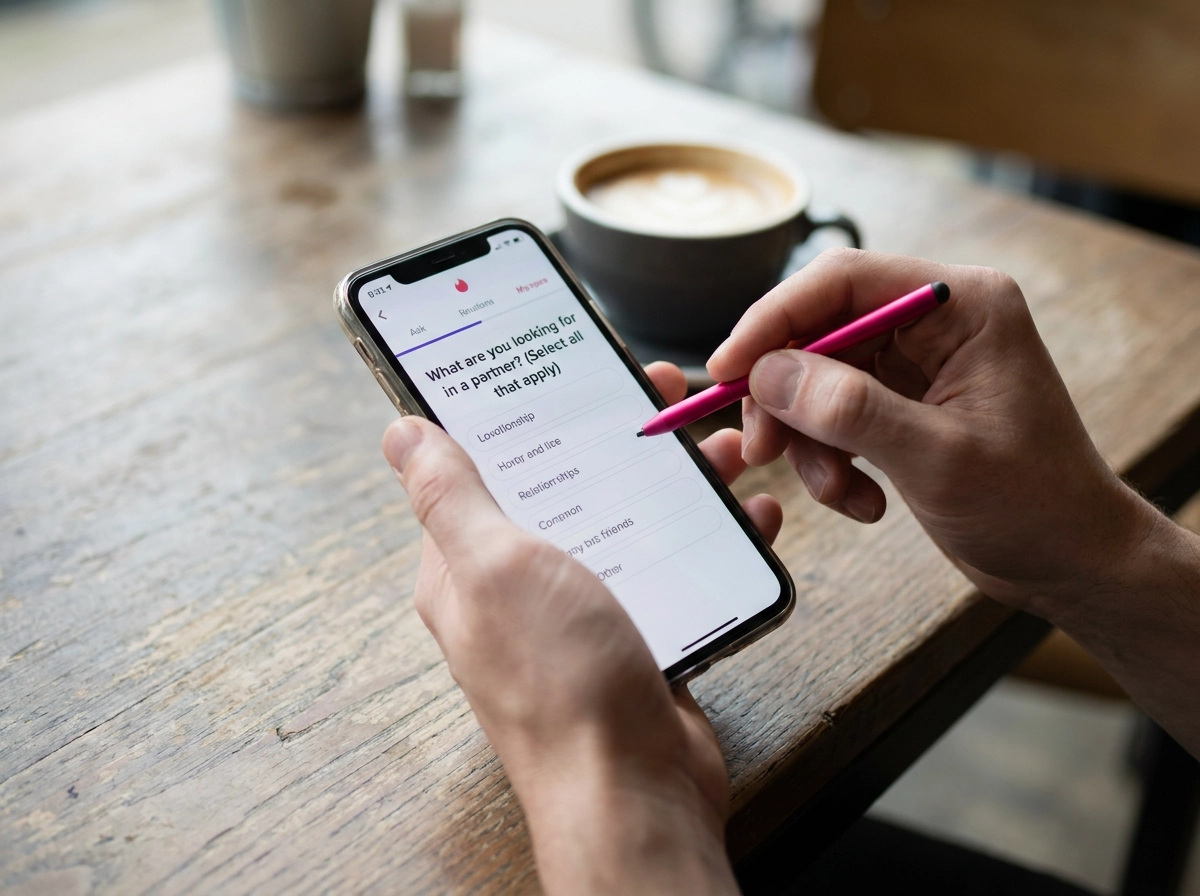
Ditto, a matchmaking app for college students, works this way. It matches verified college students based on values and preferences, then sends one curated match every Wednesday at 7 PM along with a date plan including time, place, and match details. Once a plan is on the calendar, you can start thinking about where a second date should go if the first one lands.
One match a week leaves no volume strategy to hide behind. Your time, availability, and honesty have to be real, or the date won't be good. That's the whole point.
Use this checklist on any intentional dating app:
Does it require substance from you beyond a selfie?
Does it tell you why you matched?
Does it hand you a plan, so the messaging stage isn't where the energy dies?
Tips for Staying Intentional Once You Start Dating
Choosing an intentional dating app was the easy part. Staying intentional after the first match is where people fold. Five habits keep the readiness work from quietly undoing itself.
1. Re-check your bandwidth before every date. Week 10 you is not week 2 you. Midterms, shifts, and practice all move. Before you say yes to date three, run the same time math you ran in the beginning.
2. Keep your honest sentence ready. Write one line about what you want and one about what you don't, then say it again once you actually like someone. Feelings don't get to quietly rewrite your intentions.
3. One good match beats five low-effort threads. Notice how much of that swipe fatigue came from volume, not from dating. A single real conversation is a better use of a week than five dead-end chats.
4. Ask for a plan, not a vibe. Dates with a time and a place actually happen. Vague "we should hang out" texts are where campus almost-dates go to die. Stuck on ideas? Here are first-date ideas that come with a real plan.
5. Give yourself permission to pause. If a readiness check fails, sitting out a semester is an intentional choice, not a failure of effort.
Run these five checks and readiness stops being a one-time quiz.
Your Move: Assess First, Then Choose
Pausing is allowed, and so is the next step: deciding whether you're ready at all.
Intentional dating is a readiness question about time, availability, honesty about what you want, and showing up as yourself. It's not a personality label you claim in a bio.
Swipe fatigue is a reason to slow down, not a reason to download something new. Changing apps swaps the wallpaper; changing your inputs actually changes the outcome. And that only works if you've done the assessment first.
Three moves:
Map one real week. Classes, shifts, practice, sleep. Mark the hours you'd genuinely hand to another person.
Write your honest one-sentence intention. One line you'd say out loud without editing it down.
Audit your profile. Delete anything you wouldn't want to explain face to face.
If those checks pass, values-based matching gives that honesty somewhere to go. Ditto, a matchmaking app for college students, matches verified students on values and preferences and sends one curated campus match every Wednesday at 7 PM with a date plan: time, place, and match details.
The standard is simple: show up as someone who can be relied on for the plan you agreed to. If you can't yet, wait until you can.
Conclusion
Intentional dating isn't about escaping swipe fatigue. It's about being ready: real time, real availability, honesty about what you want, and showing up as yourself. If a check fails, pausing is allowed. That's not failure, it's self-respect. Swipe fatigue just means slow down, not download another app. So before you choose anything, do the work: map one real week, write your honest one-sentence intention, and audit your profile. If those pass, Ditto can give that honesty somewhere to go. It matches verified college students on values and preferences, then sends one curated campus match every Wednesday at 7 PM with a date plan. Your move? Assess first, then choose. Show up as someone reliable, or wait until you can. That's how dating gets intentional.