
What the Romance Scam Prevention Act Means for College Students
The Romance Scam Prevention Act is now law. Here is what dating apps must tell you after a fraud ban, and why students should ask for more than a warning.
10 min read
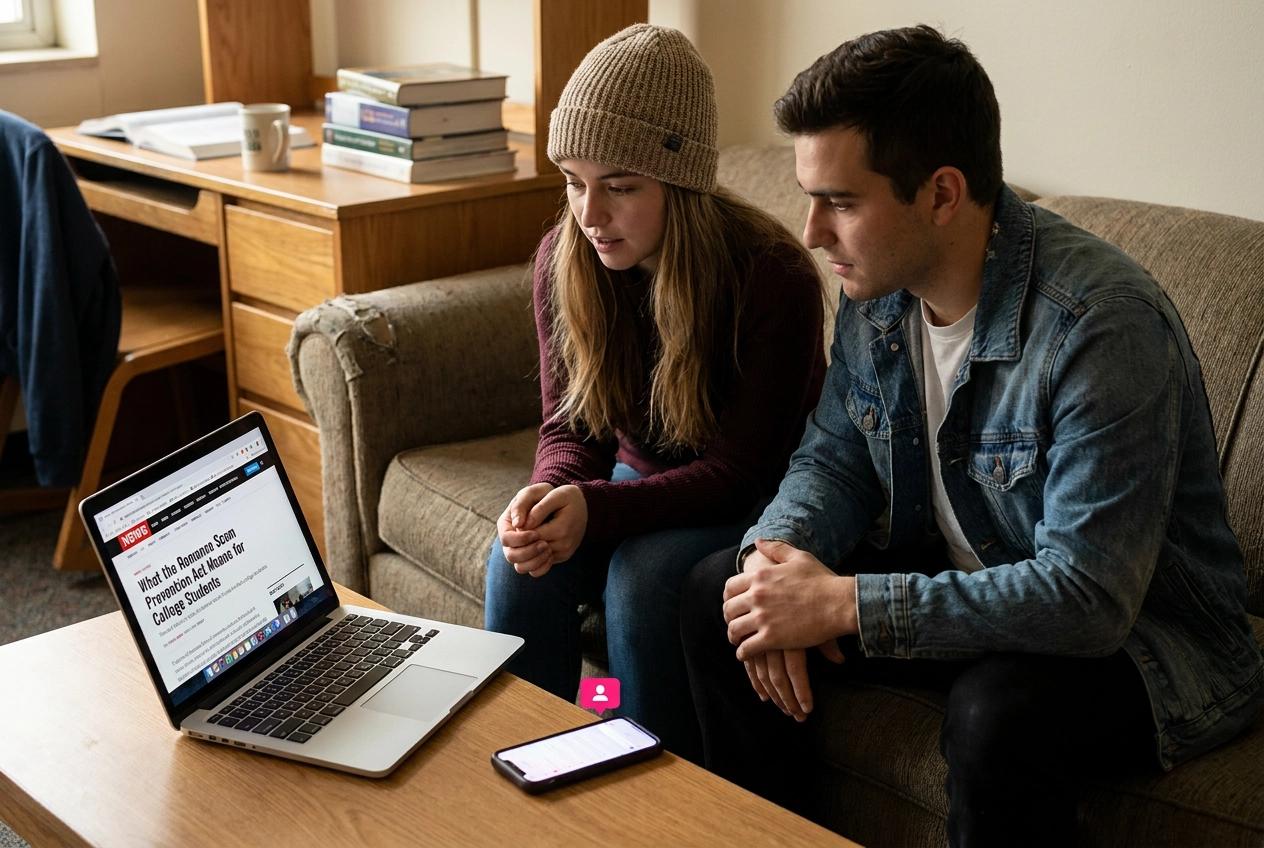
Swiping through campus and wondering if that cute match is actually real? You're not alone. The Romance Scam Prevention Act is now federal law, and it changes what dating services have to tell you when someone gets banned for fraud. The catch? A warning that shows up after weeks of chatting is a floor, not a fix. The stronger protection is prevention, like matching inside a verified campus pool where banned accounts have a much harder time getting in. In this post, we'll walk through what just happened, what the law actually requires dating apps to tell you, who enforces it, and what the safe harbor really means. We'll also explain why an after-the-fact warning is not enough, what to ask a dating service before your next match, and answer the questions students keep asking. By the end, you'll know why the smartest question is not just "Will you warn me?" but "What are you doing to keep banned accounts out?"
What Just Happened: The Romance Scam Prevention Act Is Now Law
The Romance Scam Prevention Act is now law. Congress enacted it as Public Law 119-129 on October 20, 2026, and it started life as H.R. 2481, which passed the House on June 23, 2025. Rep. David G. Valadao sponsored it.
Here's the short version of what changed: if you've received a message from someone who then gets banned for fraud, the dating service has to send you a fraud ban notification (Public Law 119-129).
Why does that matter? Romance scams rarely open with a cash request. Someone builds trust over weeks of chatting, then turns the conversation toward money or your financial details.
One boundary to flag up front, because it shapes this whole piece: nothing in the provisions we reviewed requires pre-screening, identity verification, campus scoping, or stopping banned users from re-registering. So the questions about how an app verifies users and handles their data stay yours to ask.
Next up: what those notifications actually have to contain.
What the Law Actually Requires Dating Apps to Tell You
The trigger is narrower than you'd guess: under Public Law 119-129, the duty applies, by the letter of the statute, only when you've received a message from someone banned for fraud. As far as the text we reviewed shows, only a message triggers it: matches, views, and likes appear not to.
When it applies, the notice must include:
The banned member's username or profile identifier
The time of their most recent message with you
A statement that they may be using a false identity or trying to defraud you
A warning not to send cash or financial information
Fraud best practices, a link is fine
Customer service contact details
Timing is where it gets real. The clock starts at the ban, not at your first hello: 24 hours by default, extendable to 3 days if the provider judges it necessary, and longer if law enforcement asks.
So if you'd been chatting with someone for three weeks before the ban, you don't get notice tied to that first message. You get it within 24 hours of the ban.
Text-a-friend version: "This account got banned, here's when they last messaged you, don't send money, and here's how to reach us." That's a lot of weight on one notification, and how a curated match gets chosen matters just as much as what the warning says.
Who Enforces the Law, and What the Safe Harbor Really Means
So who actually checks that the notice goes out? The Federal Trade Commission. Under Public Law 119-129, ignoring this rule counts as violating an FTC rule on unfair or deceptive practices, which hands the agency its standard authority to act.
In beginner terms, that gives the FTC a familiar hook to grab when an app skips a warning. Notice what the hook covers, though: the notice itself. Not screening, not verifying users, not removing accounts.
Then there's the safe harbor. Per the statute, a provider is not liable to members, banned members, or former members for claims based on complying with the notification requirement. It shields the app for sending the notice. It is not a guarantee that a banned account stays gone or never pops back up under a new profile.
The takeaway: this law gives you information and a complaint path, not a personal protection plan. That is exactly why the habits in the next sections still carry the weight.
Why a Warning After the Fact Is a Floor, Not a Fix

This next part is analysis, not a finding in the statute. The law's requirements live in Public Law 119-129; the argument below is ours.
The duty is reactive by design. It only kicks in after a ban is already in place, and only for someone who already messaged you. The warning lands downstream of the contact that mattered.
And the clock starts at the ban, as covered earlier, so those first weeks of chatting stay unwarned.
A notification is not a refund. It can't pull back money you already sent, unshare the financial details you already gave, or hand back weeks of emotional investment. That timing is exactly when a scam does its damage.
Nothing here requires prevention. The statute doesn't mandate ban prevention or identity verification, so a banned user can spin up a new profile. Notice is a floor of platform accountability, and the statute requires nothing more than that.
So the warning is useful, but it's a paper trail, not a shield.
What to Ask a Dating Service Before Your Next Match
If the law is the floor, these questions are how you check whether a service actually does more. This is advice, not statute, and it's the practical half of the prevention-over-warning argument.
1. What does the service do to keep banned accounts out? Not how it warns you after a ban, but what stops that person from returning under a new profile. That one answer separates a floor from a fix.

2. Does it verify that users are real people? For a campus product, does it confirm actual enrollment? The new law doesn't require verification, so asking is on you.
3. Is the matching pool limited to your campus, or does it reach a global user base? A tighter pool is a smaller surface for a fake profile to operate in.
4. What habits do you control? Get skeptical fast if someone steers toward money or financial details. Move to video or an in-person public meeting early, and tell a friend where you're going. Those are personal safeguards, not statutory ones.
Money talk is also where values surface, so it pays to know how to ask deep questions that surface shared values on a date.
FAQ: What Students Keep Asking
Do dating apps have to verify users are real? No. Nothing in the provisions we reviewed requires identity checks, screening, or campus scoping; what they require is the fraud ban notification itself. Verification is a choice a service makes, and a tighter pool is a smaller place for fakes to hide, the same logic behind campus matchmaking beating swiping. That's advice, not law.
How fast is the warning? Within 24 hours of the ban. Providers can extend to 3 days; law enforcement can request longer.
What if an app skips it? The FTC enforces the law, and a violation counts as an unfair or deceptive practice. That's a regulatory problem for the company, not a payout for you.
Next: does this reach a campus matchmaking service?
Does the law require dating apps to verify that users are real?
No. Nothing in the provisions we reviewed requires dating apps to verify users, pre-screen them, or limit matching to a campus. The duty they spell out is narrower: notify you after someone has been banned for fraud.
So verification stays the service's choice, as the first FAQ answer covered.
Just don't treat the law as a safety guarantee. It's a notice duty aimed at platforms: they have to warn you, not promise every profile is genuine.
How fast would I actually get a fraud ban notification?
Here's the rule, straight from Public Law 119-129: once a dating service bans someone for fraud, it has to notify you within 24 hours if that person messaged you. The provider can stretch that to 3 days if it decides the situation calls for it, and law enforcement can ask for a longer pause during an active investigation.
Practically? Treat the warning as a catch-up, not an early alert. If someone's steering things toward money, don't wait on a notification, the clock rule from earlier, in other words.
What happens if a dating app ignores the rule?
So what if the app never sends that notice? That's where the FTC steps in. Under Public Law 119-129, the FTC enforces this law, and a violation is treated as a violation of an FTC rule on unfair or deceptive practices, which gives the agency a real hook to act on.
Friendly translation: skipping the notice is a regulatory problem for the company, not a cash payout for you. Nothing in the statute describes money going to users when an app drops the ball.
And the safe-harbor rule we covered earlier cuts the other way: it protects apps that send the notice.
One more thing to weigh alongside what casual vs intentional dating looks like in practice.
Does this apply to a campus matchmaking service?
Honestly? Nobody knows yet. The statute doesn't clearly say whether a campus matchmaking service counts as an "online dating service provider," so we're not going to pretend it does or doesn't. The law's text doesn't settle that question, and no source we found answers it. What we can say: don't assume any specific app is covered, and don't assume it isn't.
Here's the part that actually helps you. Whatever the legal label, you can ask a service what it does to keep banned accounts out of your pool. That question works on any app, covered or not, and it's the same idea behind campus matchmaking in Canada, explained without the hype: a smaller, verified pool beats a warning that shows up after the damage.
The Bottom Line: Ask for Prevention, Not Just a Warning
The Romance Scam Prevention Act sets a floor. A floor tells you after the fact. Prevention keeps the contact from happening at all.
So here's your three-step takeaway. If a notice arrives, read it. Ask any service what it does to block banned accounts and verify users. And keep your own safeguards on money and meetings, like moving to a public spot early. A group hang can make that easier, which is why double dates are worth considering.
Ditto describes its own model as prevention-first: verified college students, one curated match from your campus every Wednesday at 7 PM, plus a date plan with time, place, and match details. That's the company's stated approach, not an independently proven guarantee.
So carry one question into your next match: not "will this app warn me," but "what does this app do to keep banned and fake accounts out of my pool in the first place?"
Conclusion
The Romance Scam Prevention Act is a start, not a full shield. It sets a floor: apps have to warn you, but a warning lands after the scam already has a chance. Enforcement and safe harbor rules matter, yet they don't prove every banned account stays out of your pool. So take three things with you: read any notice, ask what a service does to block banned and fake accounts, and keep your own money and meeting safeguards in place.
Your next step is simple. Before your next match, ask that prevention question directly; Ditto's stated Wednesday-match model is the kind of prevention-first approach to look for. Go ask it.